International Dirtbags
Our international dirtbag adventures continue. Though this feels like dirtbag luxury - 10 cent coffees, $1.50 cocktails, $4 curry dishes, and beautiful bedrooms for under $10/night. We feel like kings.
In fact at one of our regular lunch spots the workers recognize us and know our names. They call us “Sir Tanner” and “Sir Neil” lol. The Philippine culture is so polite, generous, and accepting.
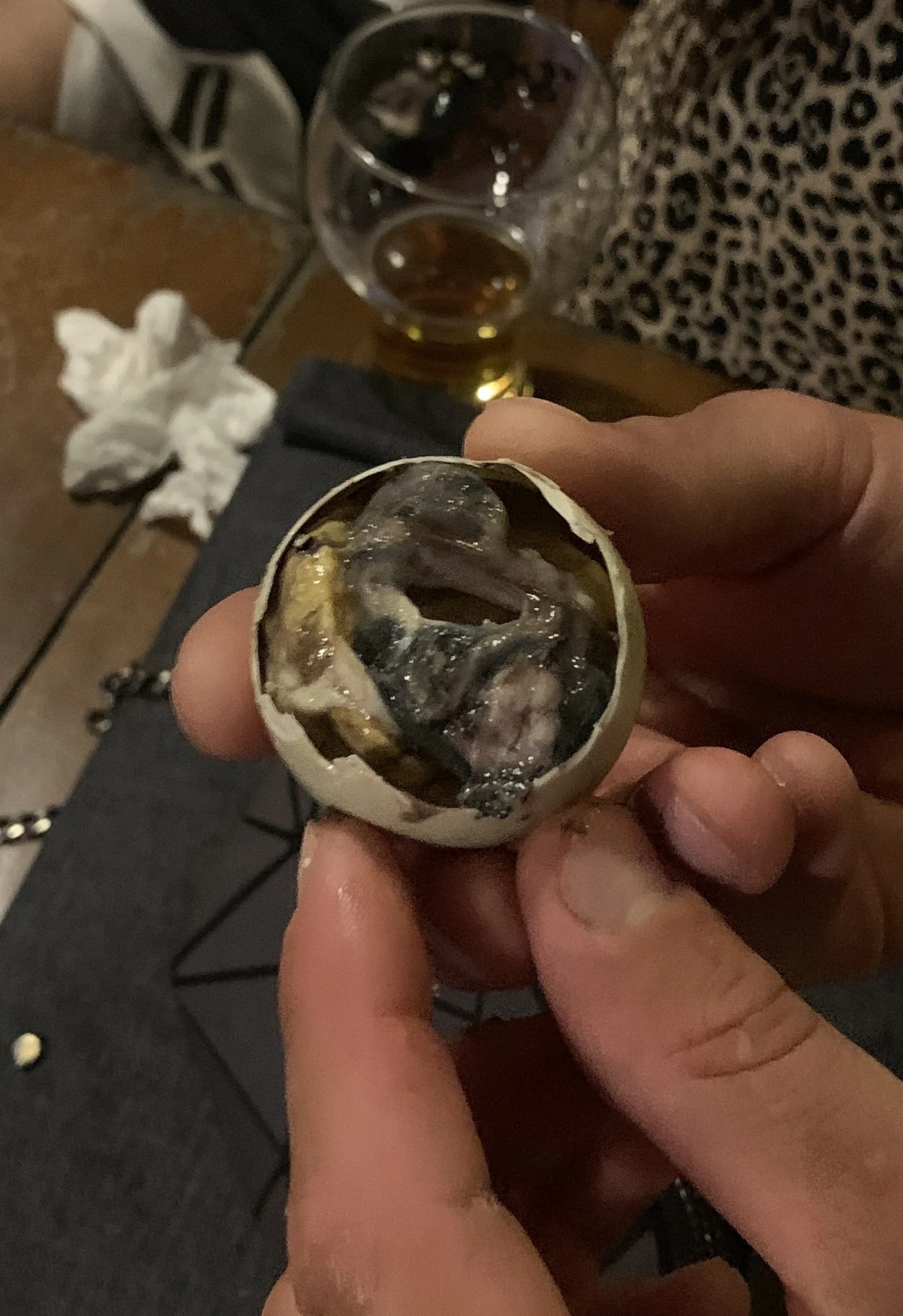
Speaking of culture we tried a local delicacy. “Balut” is a fertilized, developing duck embryo that is boiled and served inside the egg. No matter how gross we couldn’t turn down free calories.
Thanks to Denton’s recommendation I’d been searching for it all trip. Taste: 5/10, Texture: 2/10. The taste wasn’t bad, similar to a boiled egg. Biting through the developing duck fetus wasn’t terrible. But sections of the egg were incredibly stiff, hard, and chunky. This was the worst part because it took over a minute of chewing to make swallowing possible. “When in Rome” I guess.
This blog will change back to daily individual adventures when I return to the states. I have big climbing and swimming goals coming up plus training involved that I’ll post about.
But the Philippines is more of an overall experience. Our daily activity of diving for depth occurs in a foreign place to most people and cameras.
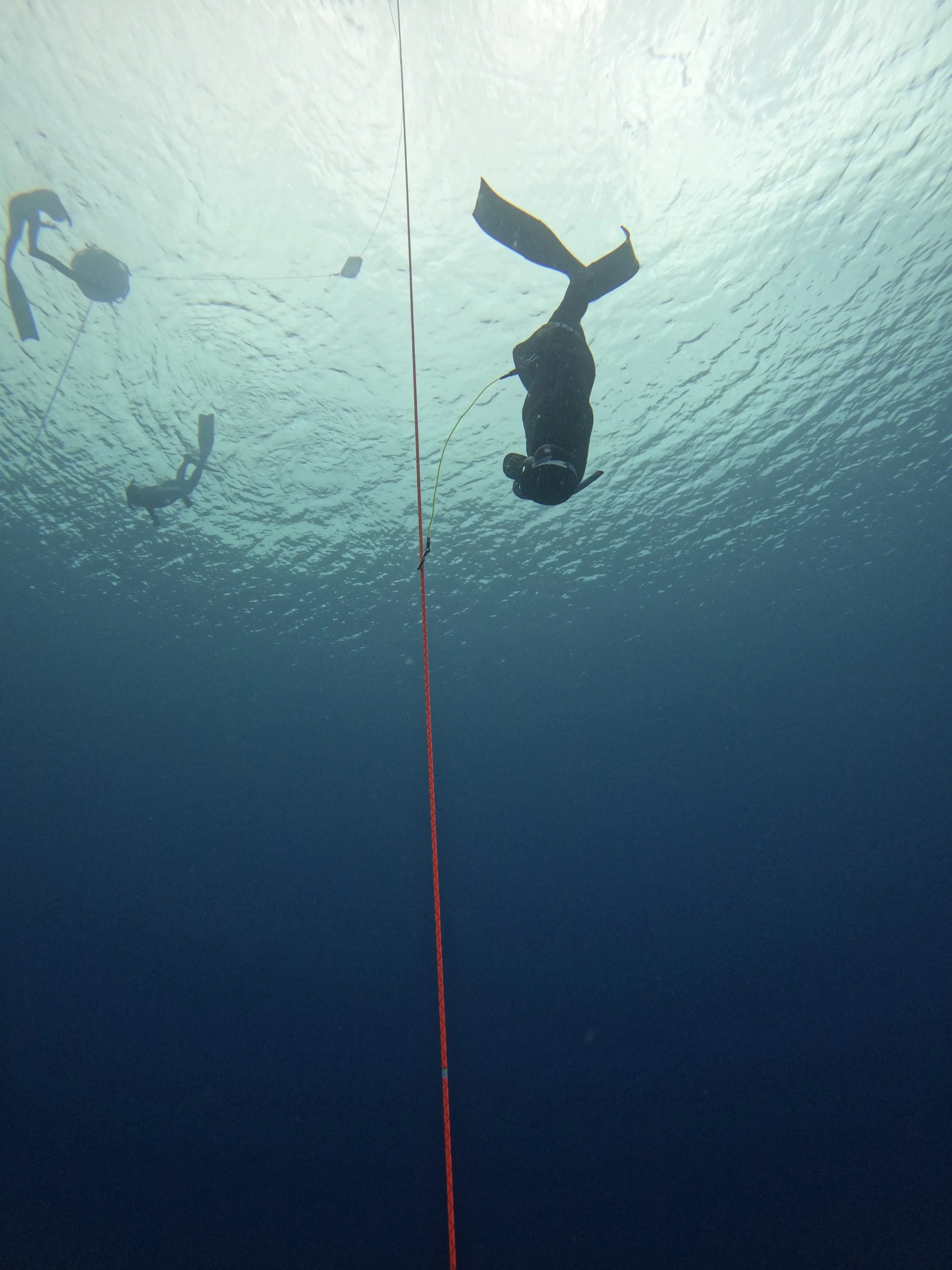
We barely have photos of our dives except near the surface of the line. It’s not a spectator sport. Much of the progression and enjoyment occurs in the mind. So the posts from here will instead be my random thoughts and ramblings. They’ll vary from observations and cultural differences to conservation.
photo credit: Guy Scott-Robertson
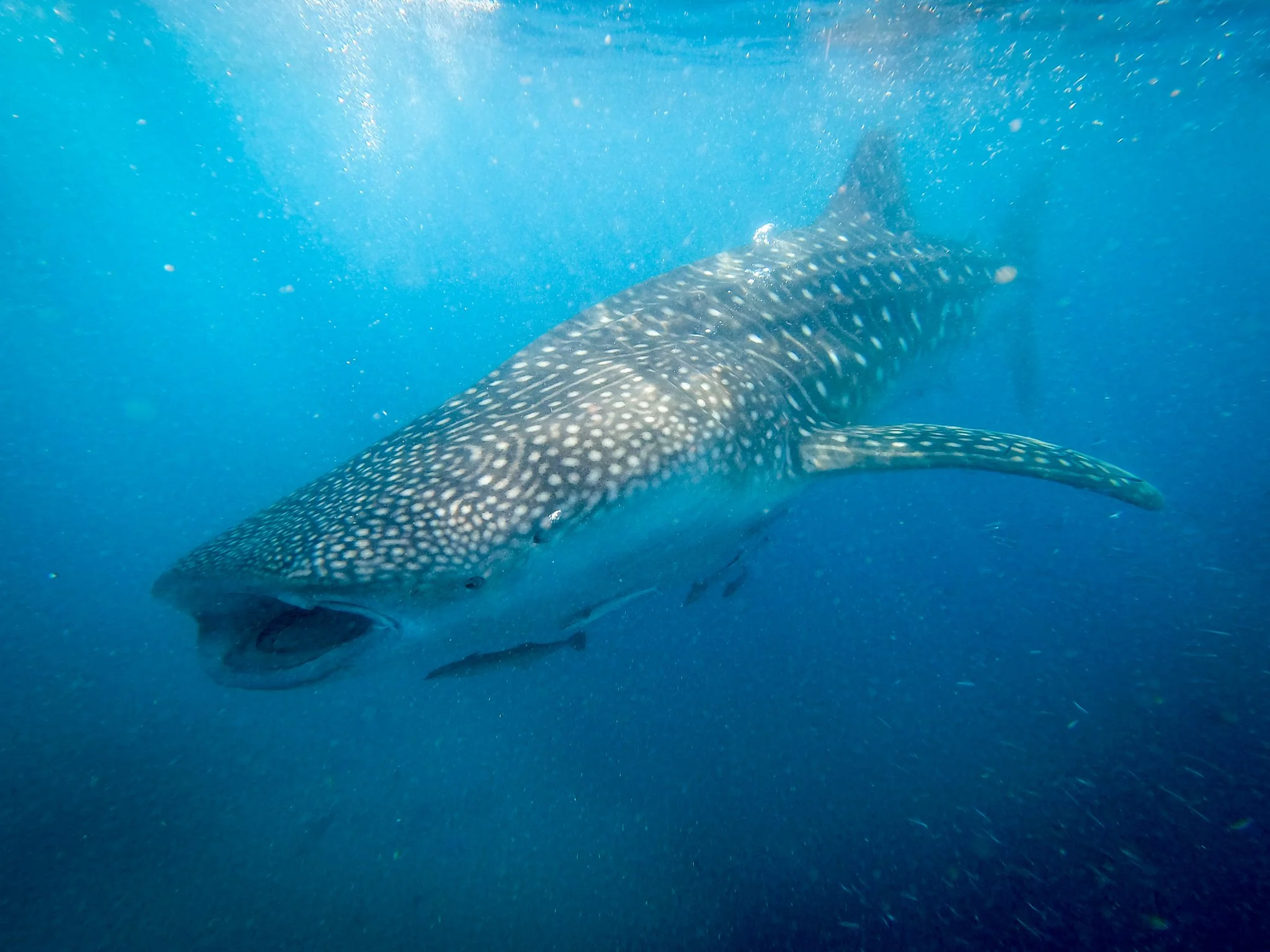
I saw my second whale shark. The first was four years ago in Thailand with Ian. A lucky, natural encounter on a reef. This second encounter was a bit different.
The Philippines has several “feeding sites” where wild whale sharks are fed by locals. The largest operation occurs in Oslob, on the island of Cebu. Opinions about the feeding somewhat differ depending on who you talk to.
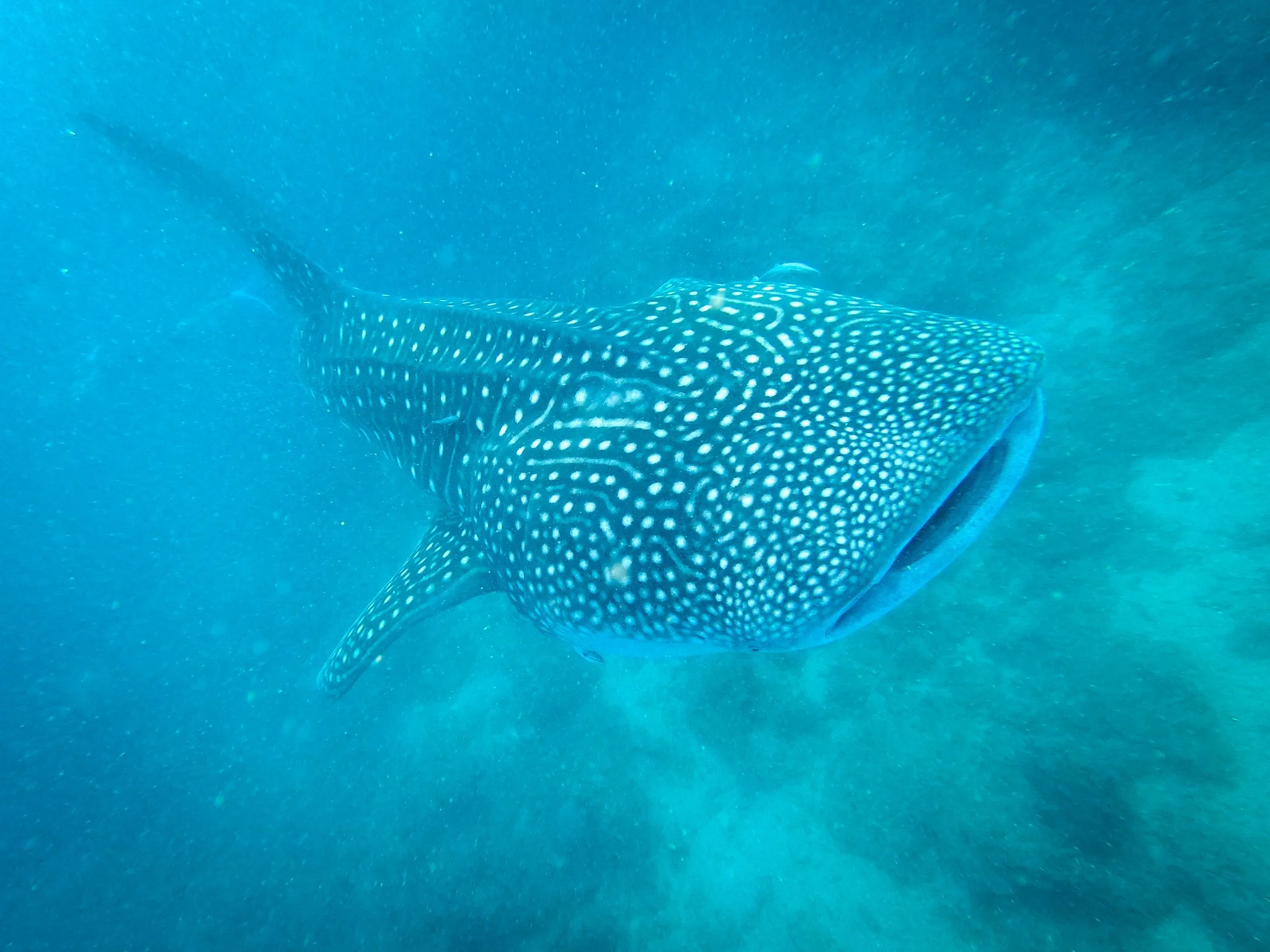
Reports of deeper conservation benefits seemed evident. Nearer to us was a smaller, newly established site on Bohol. A couple of us tried it one day to see for ourselves.
I won’t bore you right now with a wildlife rant. But if you scroll to the end of this post you’ll find my whale shark thoughts.
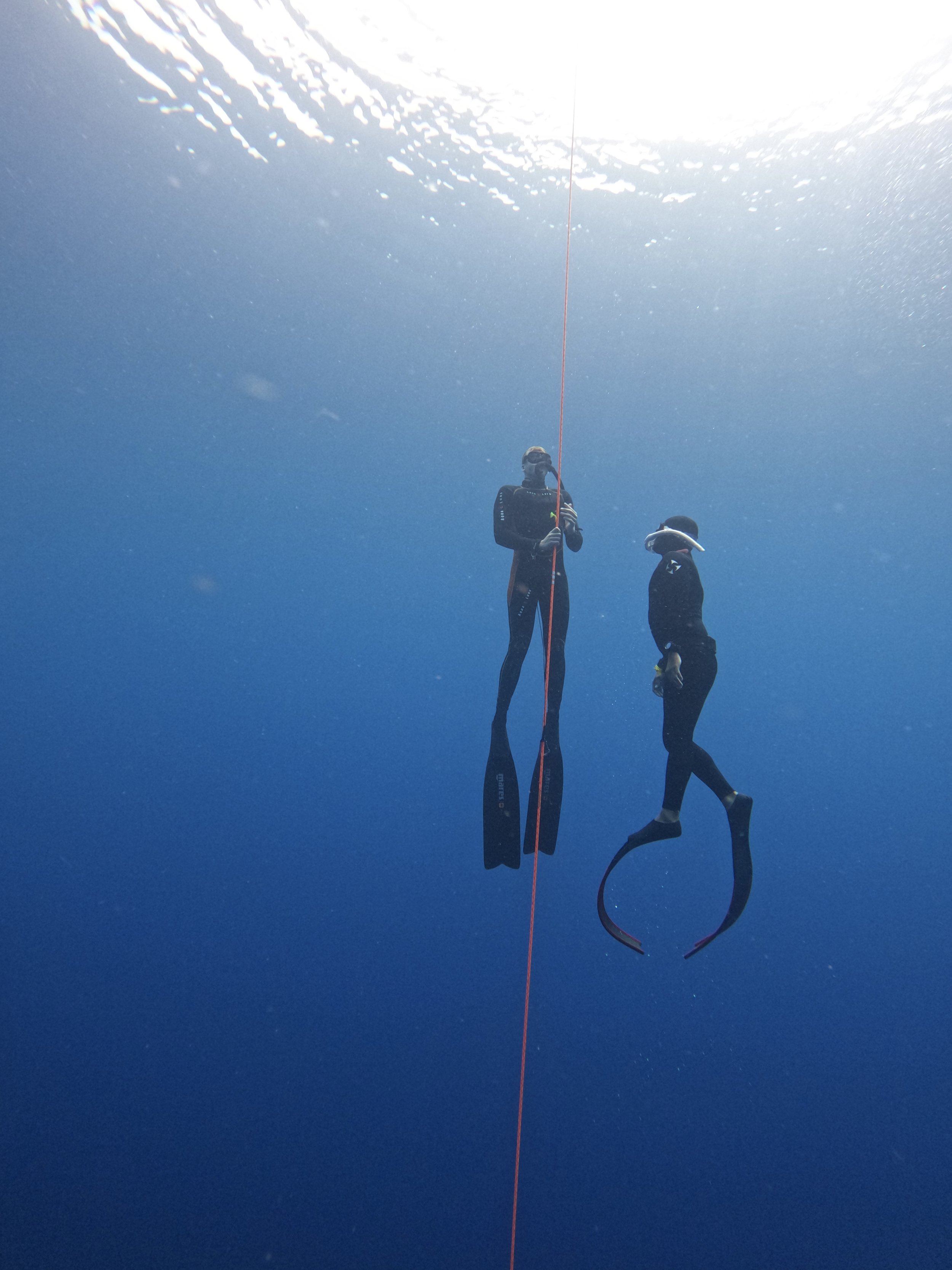
I lost three days of diving to congestion. The limiting factor in this sport is not breath holds but equalization. Avoid congestion like the plague. But I wasn’t sick. My sinuses actually dried out from air conditioning. You read that right - ya I’m a fragile little b*tch.
Turns out it’s very common and many freedivers refuse to sleep with A/C, and will arrive to competitions weeks ahead expecting congestion issues from it. Some even go as far as wearing masks on air planes pre-COVID era. It creates a little humidity chamber for your airway amongst the A/C.
photo credit: Guy Scott-Robertson
Freediving is a silly sport in that you have to be so healthy - a perfect microchip of a human. Don’t drink too much, don’t eat dairy, don’t breath A/C. In a way that’s awesome and partly why the sport feels so good. But it also blows. The days I couldn’t dive I still had endless energy and enthusiasm to dive. But a slight bit of congestion held me back. No other sport does that. Sure, being well-rested, well-fed, and sober always helps. But I’ve been less than ideal many times and still been able to perform.
On less than an hour of sleep I smashed a BANG and skied Mt. Moran. I once started the Grand Teton Picnic kinda drunk after drinking five beers right before. I hunted for days and packed out a deer 9 miles with COVID. I skied Mt. Tukuhnikivatz with a broken elbow. I’ve mountain biked and skied hungover plenty of times. I’m not saying these were my peak performances. But at least I could engage in the sports regardless of my condition. Freediving requires you to forfeit your vices and fully commit. I’m not mad about it. But when you travel halfway around the world and a bit of snot keeps you from diving…pretty weak.
Common Diving Disciplines
Constant Weight (CWT): Kick down and up the line using bi-fins or a mono-fin. No rope assistance. Generally most “classic” style.
Free Immersion (FIM): No use of fins, pull yourself down and up the line with your arms. Generally most relaxing style.
Constant Weight No-Fins (CNF): Swim down and up the line with no fins and no rope assistance. Generally hardest style.
Dynamic (DYN): Horizontal distance on one breath with fins (pool discipline)
Dynamic No-Fins (DNF): Horizontal distance on one breath without fins (pool discipline)
Static (STA): Resting breath hold for time motionless in water
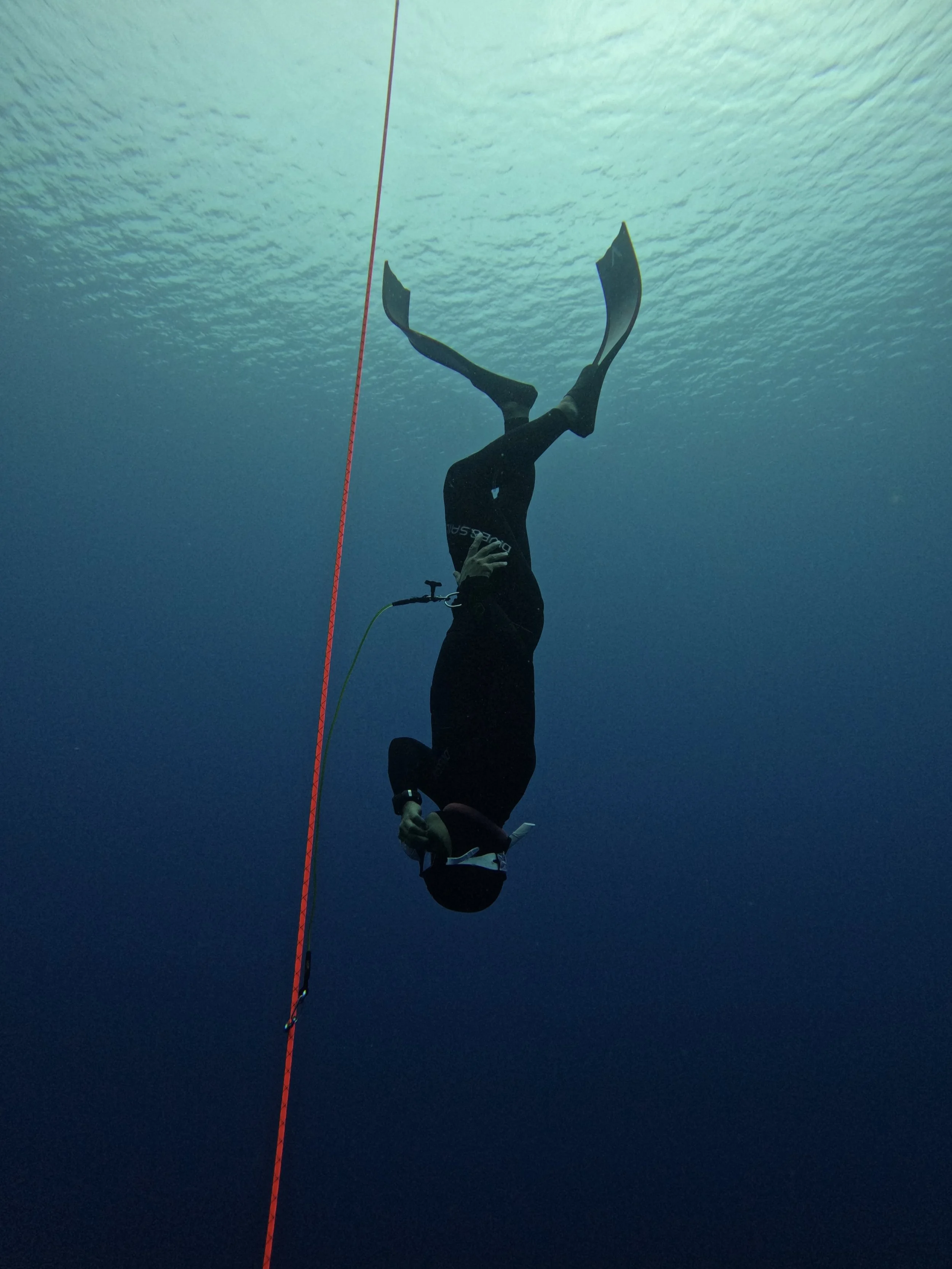
Current Progress and Goals
CWT: 35 meters; Goal: 40m (131 ft)
FIM: 35 meters; Goal: 40m
CNF: 25 meters; Goal: 30m
DYN: 100 meters; Goal: 125m
DNF: 60 meters; Goal: 75m
STA: 4:50 minutes; zero desire to try that again
We only have 4 more line-diving days left for the deep ocean. I think all my goals are possible. It’s funny. Initially my stoke was mainly on 40 meters CWT and FIM. But right now I am way too jazzed on CNF. It feels the most free and natural. Just you, your body, and your breath. No fins. Get as deep as you can. It’s also the only discipline I do with a noseclip and no mask. My last dive was 82ft with my eyes closed. It feels incredible. So right now 30 CNF here I come!
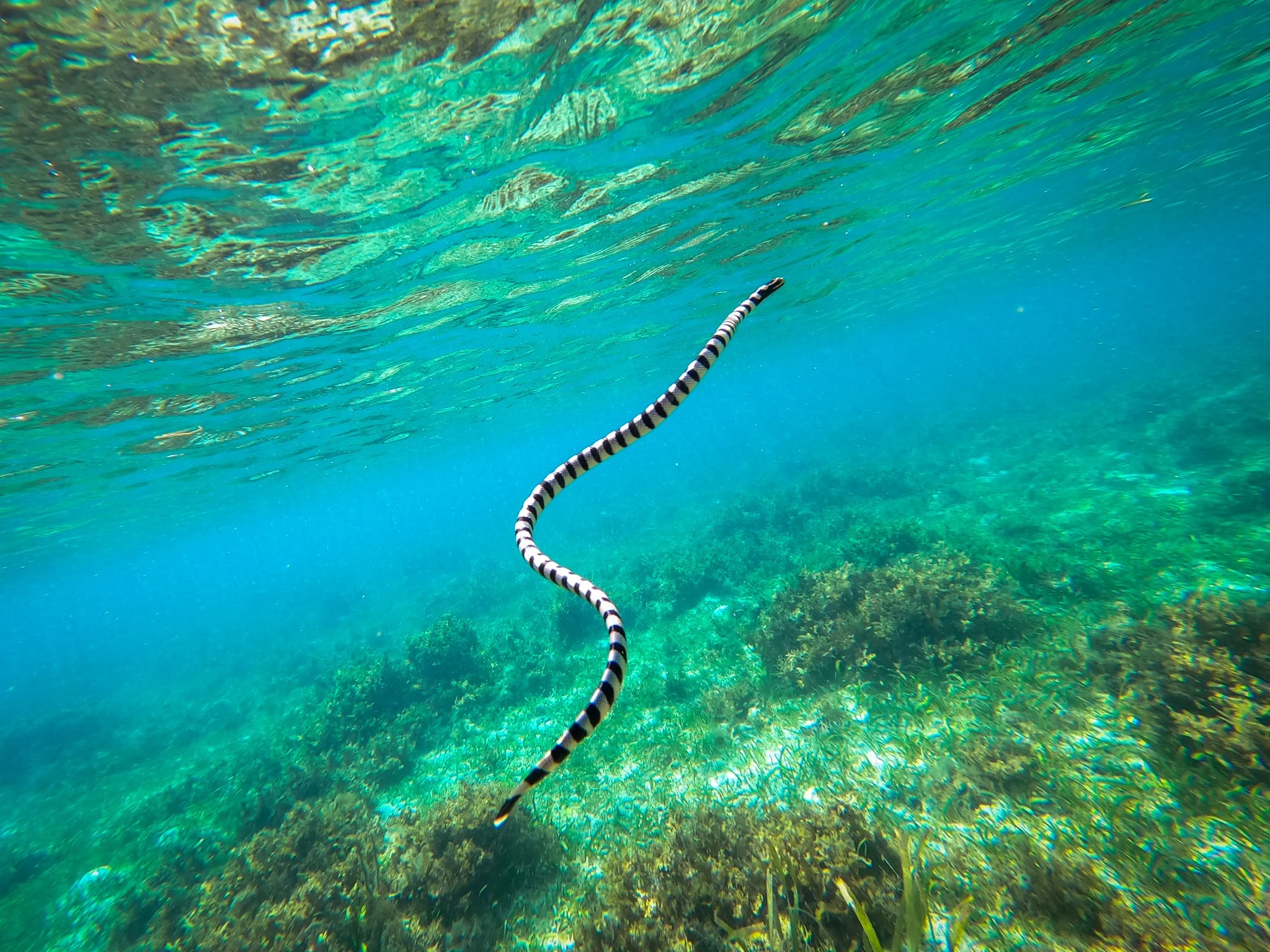
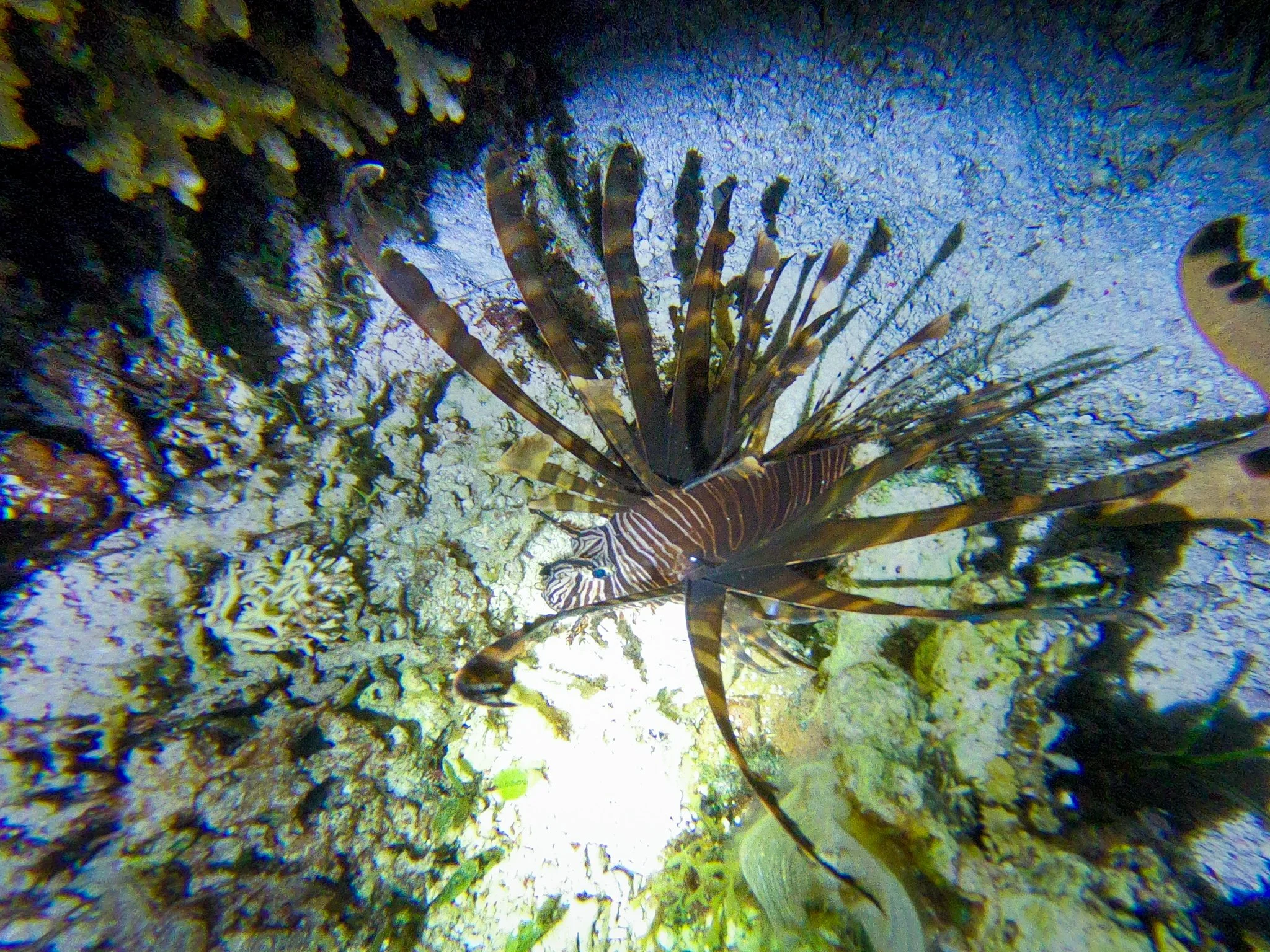
In between deep days Tanner and I fun dive local reefs. The shallower depths allow for camera use so here are some of the shenanigans. More venomous snakes, night dives, and wrecks. Life is good.
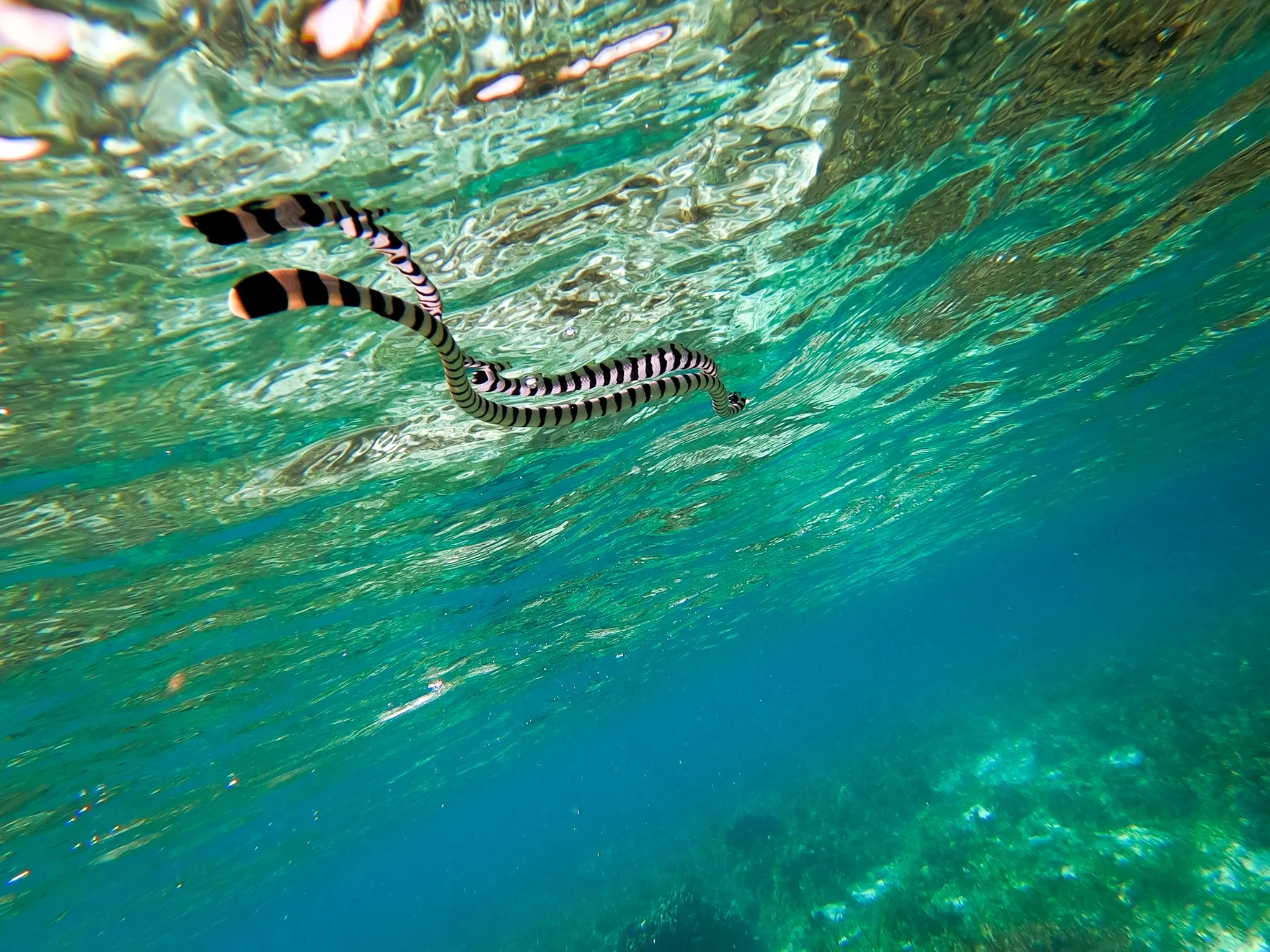
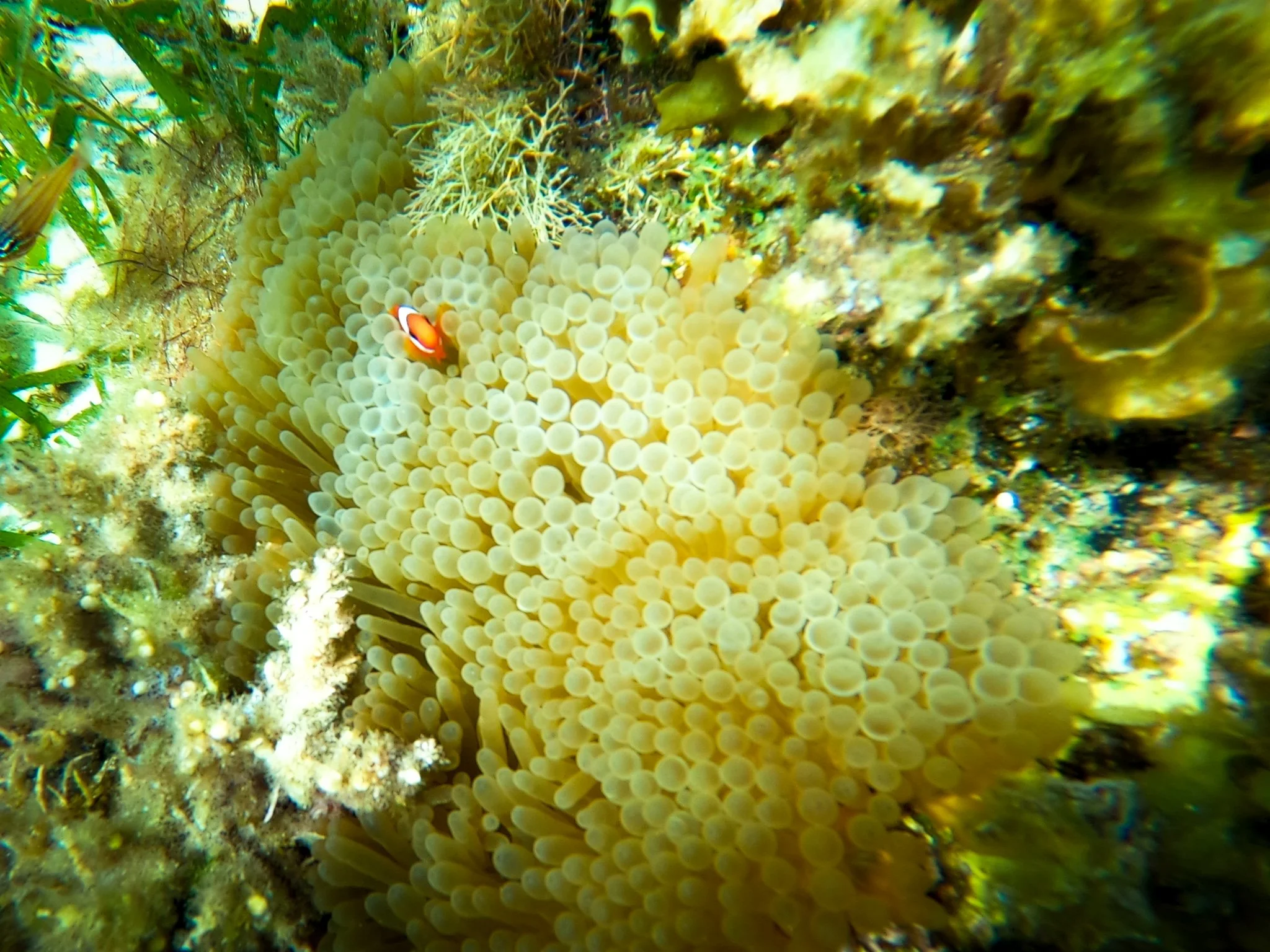
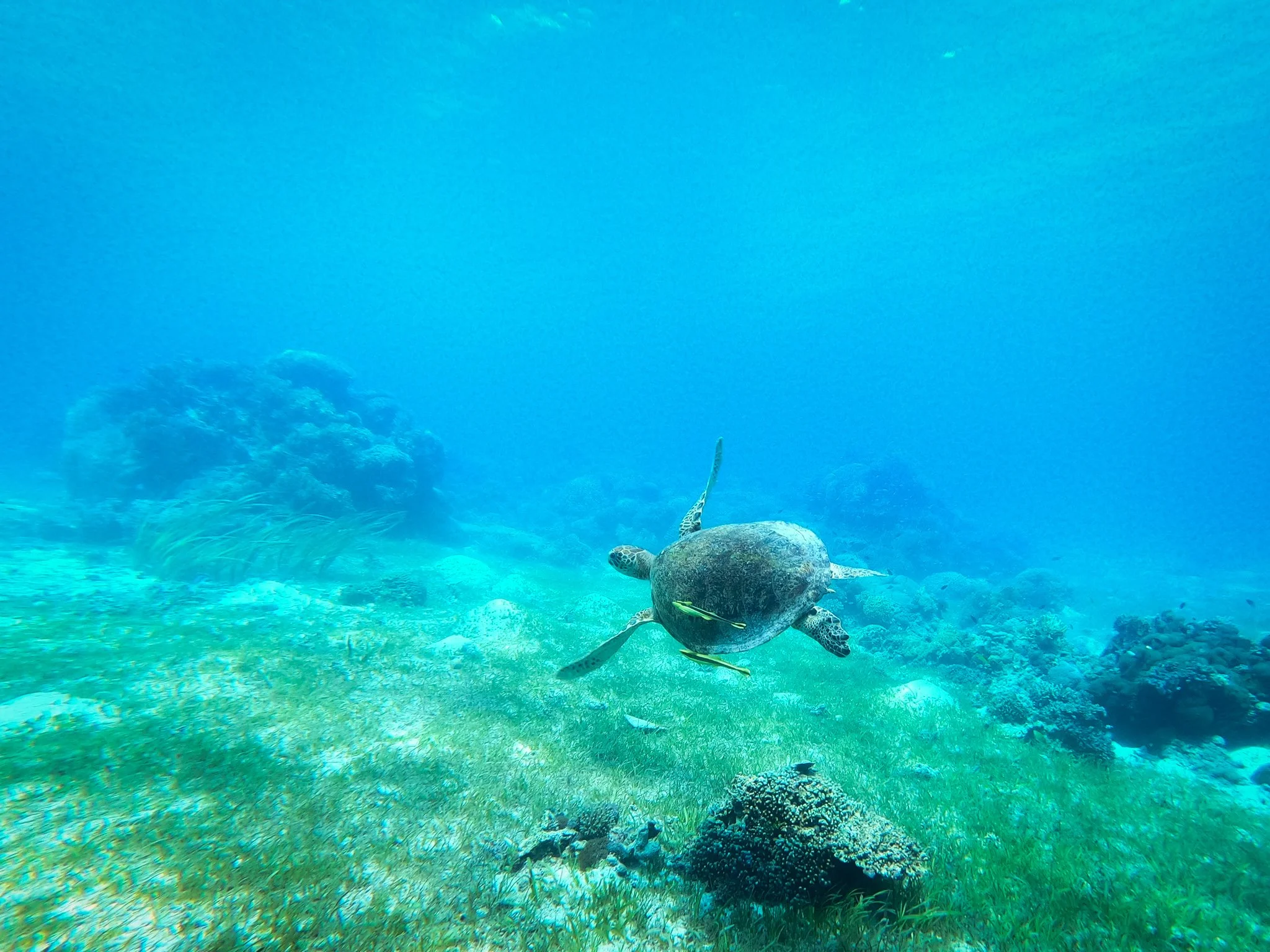
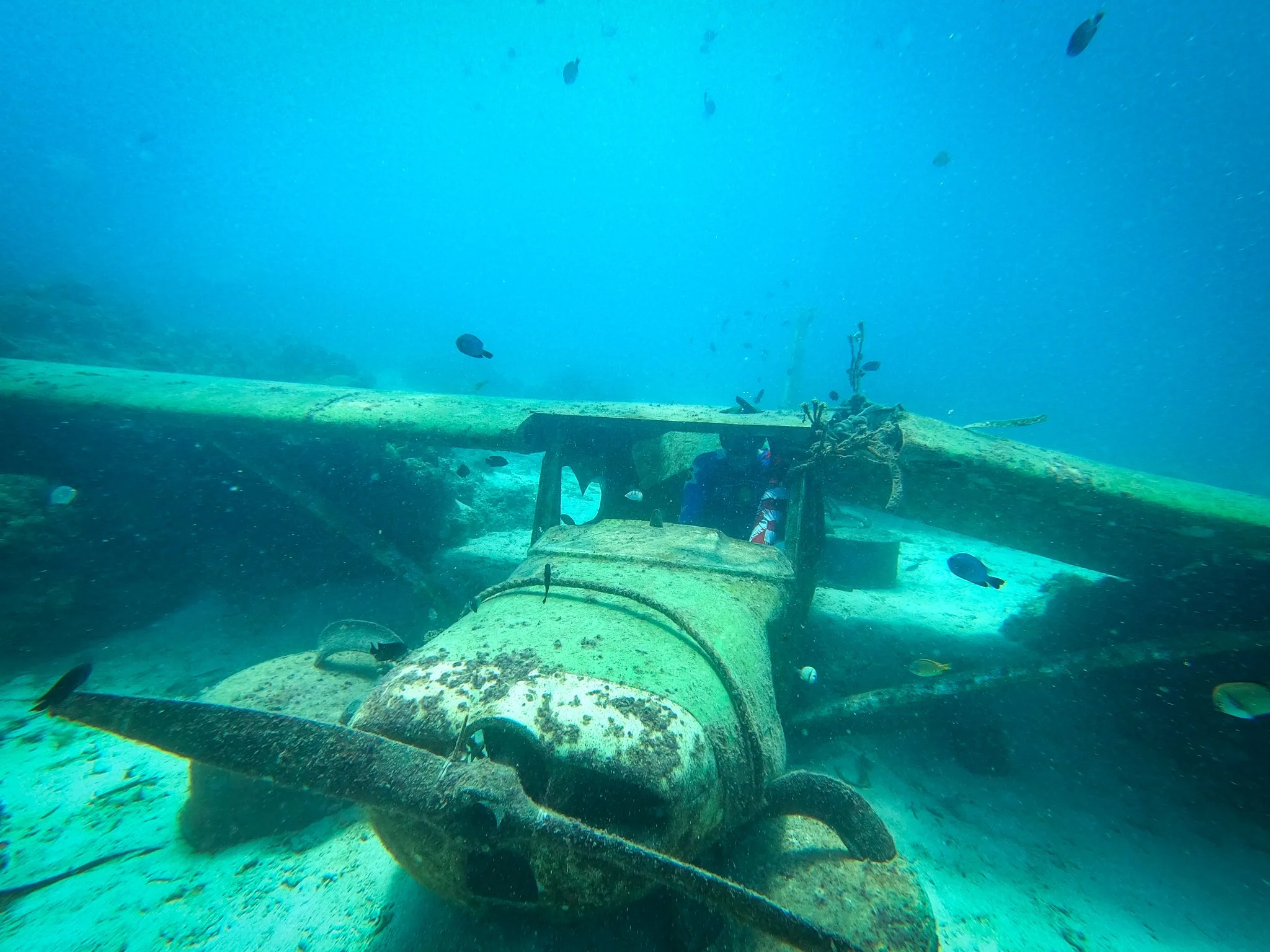
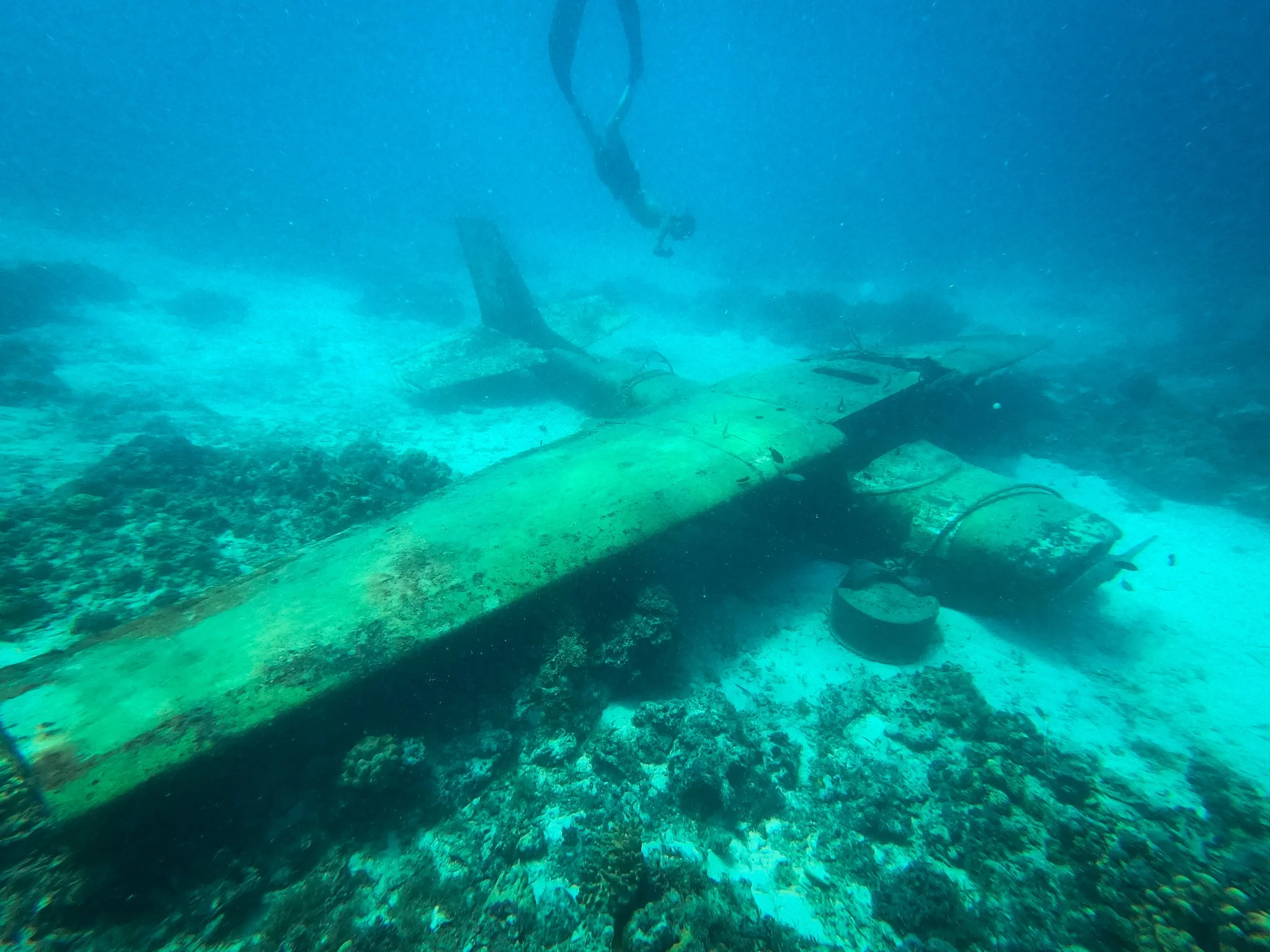
Daily we share meals and dives with people from all over the world. Naturally we discuss many cultural differences. From politics and health care to personalities and food, our discussions are always fascinating.
One day we discussed the relentless American Type-A, competitive attitude of always pushing/working and the inability to relax. Other countries have mid-day siestas, more paid time-off, 4-day work weeks, or just a chiller attitude in general.
A surprising addition came from a Norwegian diver who is also a certified judge for freediving competitions. He explained how Americans are surprisingly dramatic when reviewing their courses or dives.
An example American dive review, “I fought my way to the bottom, finally touched and turned around. I raced to the surface for that desperate next breath. Just made it!”
In contrast Europeans review their courses or dives in a chill way such as “I was so peaceful and relaxed the entire dive it felt amazing. I came to the surface in a sleepy state with barely the urge to breath.”
In a sport that revolves around meditation, mindfullness, and a reduced heart rate, I think we Americans have some learning to do. Maybe our country could use more freediving training in our daily lives?
Sebastian, a diver from Switzerland, added “this sport isn’t about the depth at all. It’s about your connection with the ocean and feelings you get from it.”
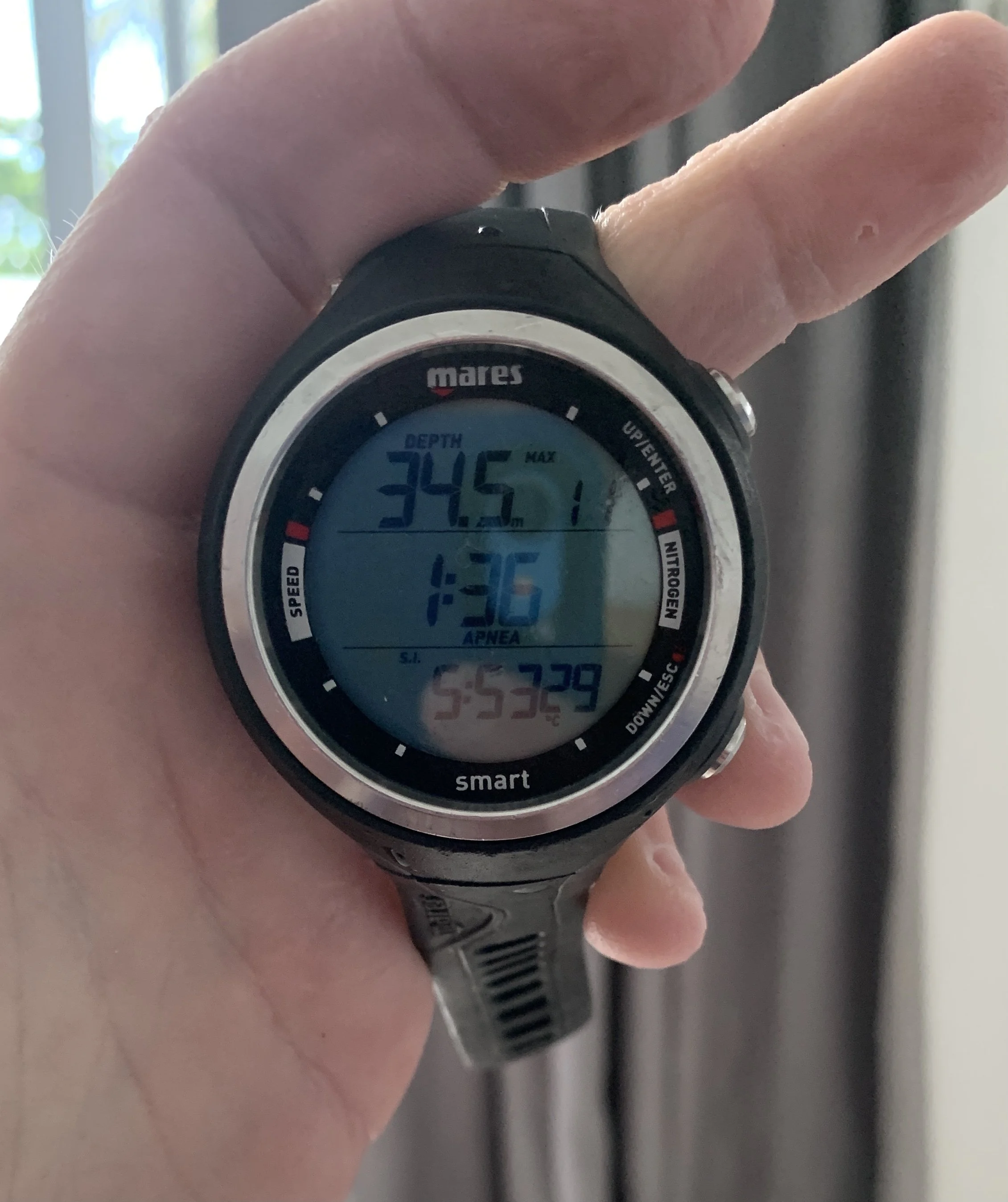
I almost feel bad having created depth goals for this trip. Sebastian is right. I seek the connection and freedom of the ocean more than a depth number on my watch. In fact my most memorable dives this trip have been my most relaxed ones, not my deepest. I was prouder of a really calm 30 meter dive than I was of a 35 meter dive right after.
But I’ve always been a math/science kid. My brain thinks in numbers. And depth goals do drive the sport deeper. But I am reminded they are not a measure of success. Great to have but not the driver of your experience with the sport. .
It’s a sport I’ve always said everyone should try. Now I know Americans need it the most. Relaxation and mindfulness are required. Pushing and grunting will only get you so deep. Eventually you’ll plateau and blackout should you push deeper.
The mind-control gained in freediving will transfer to the rest of your life, particularly in stressful situations. The mindset I have on a dive perfectly parallels that which I have climbing with big exposure or dropping into a ski line.
You’re thinking “wow Neil you’ve really reverted to your California hippie roots. How high are you?” Or maybe you’re yelling like Cartman “screw you hippie!” If I sounded too yogi or high in that last bit, you’re probably right. I’ve been high from oxygen deprivation since Denali.
____________________________________________________________________________________________________________________
the following won’t have many photos, probably too many words, and feel free to skip. I went to school for wildlife biology. Conservation issues interest me probably more than most people.
Whale Shark Conservation Rant
First the experience. Arrive, pay a small entrance fee, boat 5 minutes, hop in the water. We had one whale shark that day. It fed at the surface as 20 people crowded into the water to watch. These “tourons”, which we were apart of, splashed, screamed, and paddled around obtrusively.
Luckily we were the only freedivers so we could escape the chaos at the surface for peace deeper below. For 30 minutes the shark fed, people pushed too close, and thousands of GoPro shots were taken.
Fortunately, the shark took a break from feeding to swim deeper. This gave our freediving group a welcomed chance to enjoy the shark ourselves in a deeper and seemingly more “natural” environment. Would I do it again? No. Would I recommend it to a friend? No. Am I glad I went? Yes. How do I feel about it? Still working on that.
Why am I happy I went? I left the experience adamant I wouldn’t do it again but confused on my full opinion about the “feeding”. I needed to research more to understand the entire situation. Had I not gone I wouldn’t have this curiosity and would too easily have adopted someone else’s view.
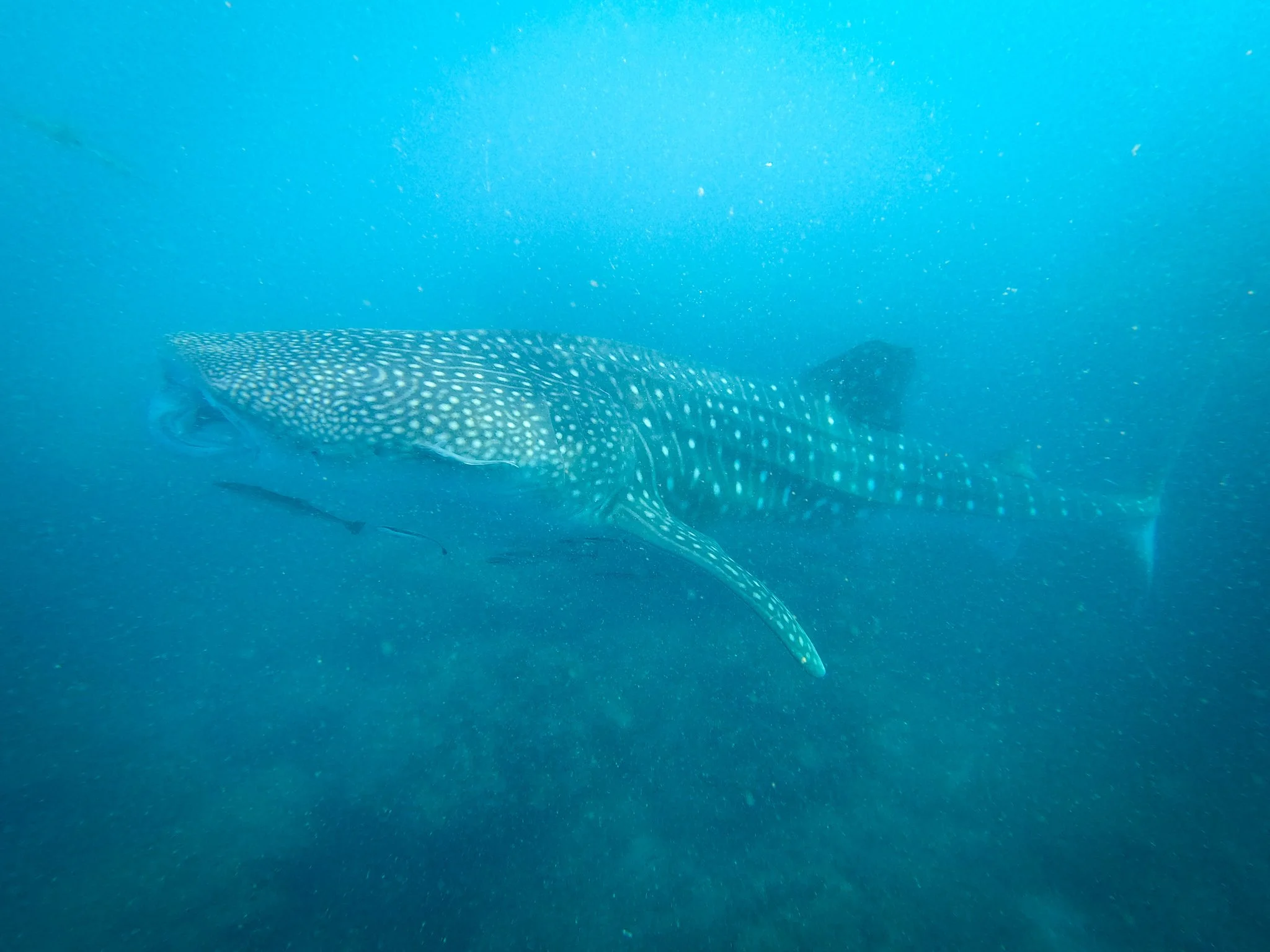
I arrived that day with a hope and dream there was an underlying conservation reason for the feeding. One hopefully similar to Wyoming’s elk feeding program. Sadly upon farther review there is not. The feeding is not to offset a natural loss of nutrition. It’s simply a tourist attraction to boost the local economy.
There was, however, a long history of whale shark poaching in the Philippines. Someone mentioned the feeding and resulting economic boost gave the locals incentive to not kill them. While possibly true, research from the Large Marine Vertebrate Research Institute of the Philippines (LAMAVE) shows the feeding is slowly killing them too. Clearly locals and scientists need to communicate and create a more sustainable solution.
LAMAVE’s research on feeding sites is focused in Oslob on Cebu, where the largest operation exists. The one we went to is too small and new for extensive data collection yet. But results would be similar. In fact Cebu and Bohol are neighboring islands where the whale sharks regularly migrate between. Here are the negative effects of feeding.
-whale shark behavior changes (diving, average depth, vertical feeding)
-human-caused scars appear on 95% of them
-less time naturally foraging could lead to dependency
-prolonged residency is disrupting and possibly stopping migrations
-loss of human fear leads to dangerous interactions with boats and people elsewhere
-Oslob’s reefs are suffering from the increased human presence
Clearly the feeding isn’t great and I’m bummed I supported it. But at the same time we have to remember the “first-world” lens we view it through.
Who are we to judge third world countries on finding ways to make money? Animals are a (somewhat) renewable resource and people will always find ways to profit off them. Is this feeding any worse than our zoos?
The Georgia aquarium has whale sharks. Is it better to ruin a few lives through captivity or slightly disrupt multiple lives through feeding but keep them wild? The feeding could be better in that animals exist naturally and can breed and benefit wild ecosystems. But it could be worse in ending migrations and reproduction for multiple animals rather than just locking up 1-2 indefinitely. I don’t have the answers but it’s food for thought.
Wildlife management and conservation is sticky. If only it was as easy as choosing what’s best for the animal. That’s simple. But wildlife science is people science. Every decision must take into account the various interest groups at stake. It’s easy to say “end the feeding” for the sake of the sharks. But where does that leave the local economy?
One idea would be to view them naturally without nutritional bribes - similar to wildlife watching in Yellowstone. But decreased success rates would reduce tourism. Plus the sharks are migratory. Part of the year they would no longer frequent the area and revenue would pause. For the locals, feeding is a no-brainer.
For 8 years LAMAVE researched the whale sharks of Oslob, attended stakeholder meetings, and approached all levels of government in order to make a change. Unwillingness to end the unsustainable management practices, however, was too rampant in local stakeholders and government. In 2020 LAMAVE ended efforts to fix Oslob and turned attention to saving whale sharks elsewhere in the Philippines.
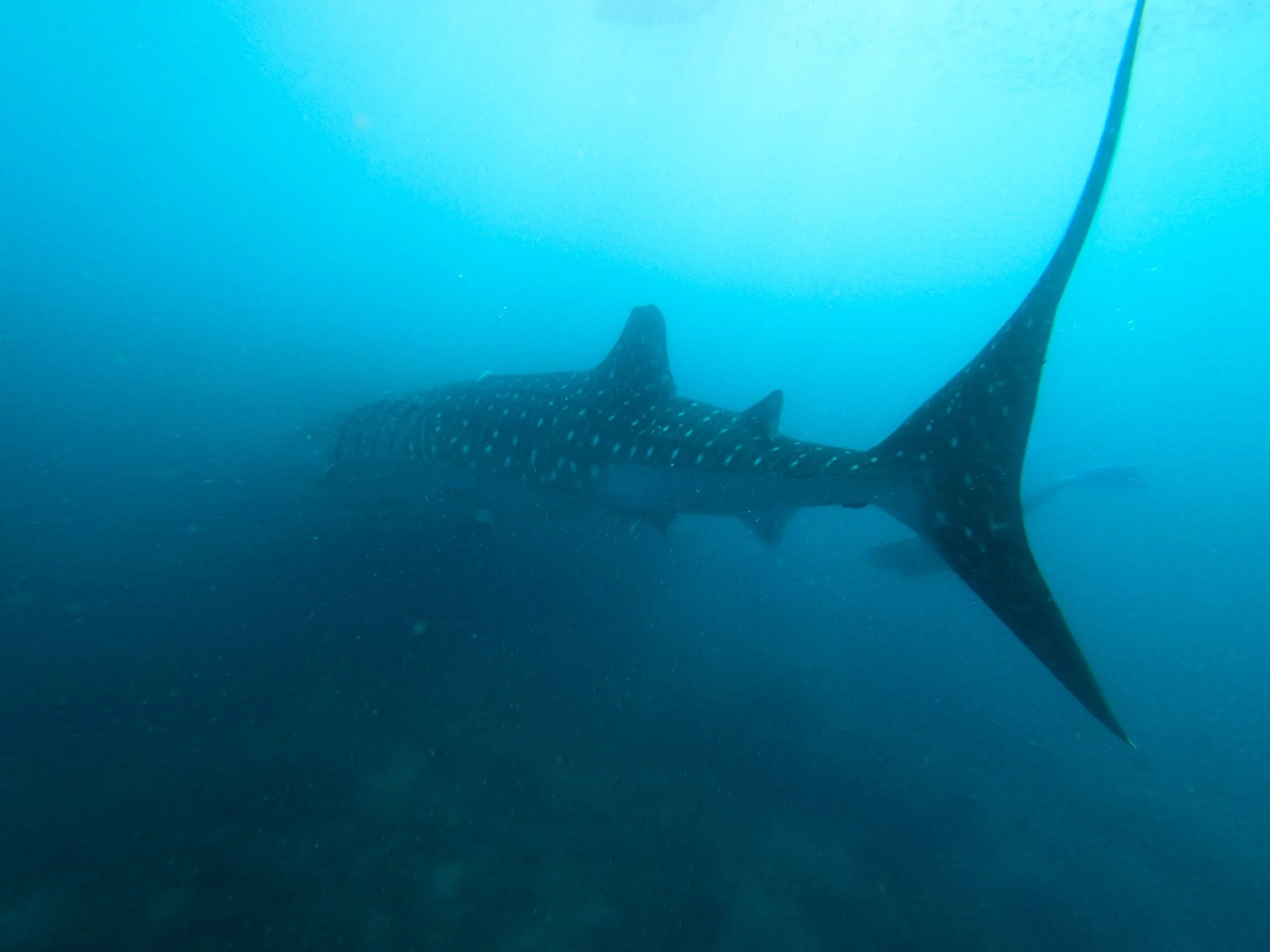
Where does this leave me? Knowing what I know now, I wouldn’t have swam with that whale shark. Am I mad at the locals? No. They are trying to feed their families like everyone else around the world who profits from wildlife.
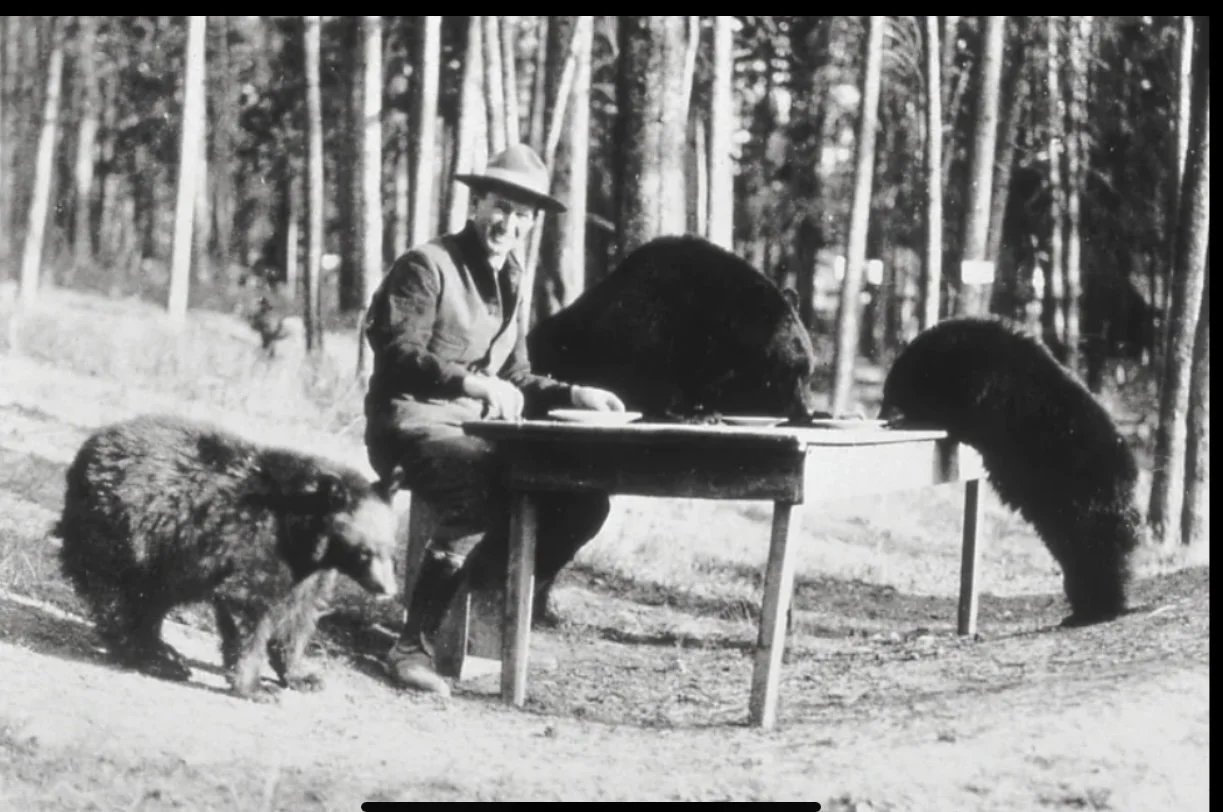
Hey wait!!! US citizens that want to point fingers at the Philippines for wildlife management - remember when you fed bears in Yellowstone?? Not for a decade like the whale sharks but for almost 100 years?
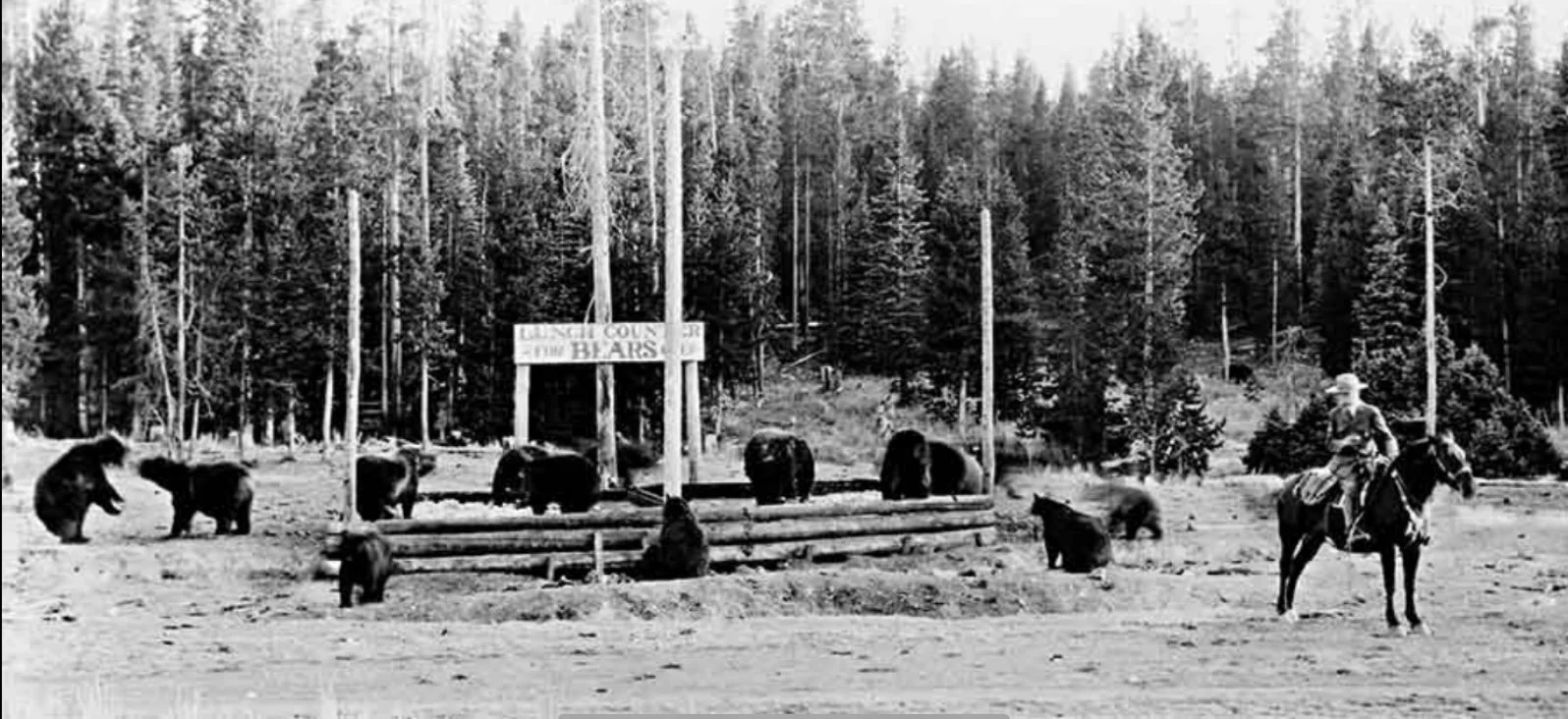
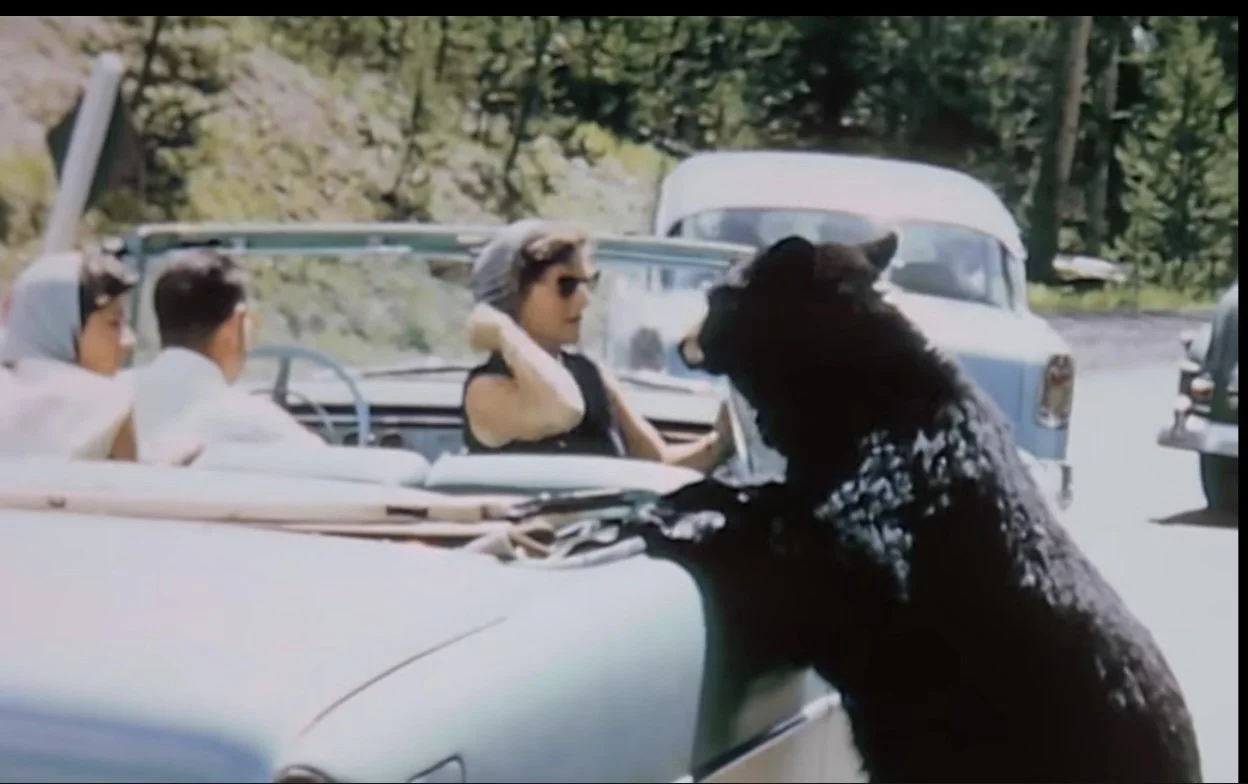
source: NPS
We took decades to learn the devastating effects that practice had on our bears. We found alternatives and have fixed the problem today. The Philippines is going through the same thing. The feeding is still new - give them time to find a sustainable solution.
As we wait, here are my recommendations. Try not to attend the feeding sites. Support the local economies in other ways. Hopefully the problems of Oslob won’t spread. Support groups like LAMAVE who offer boots-on-the-ground conservation for whale sharks. Lastly, seek out and appreciate wild, majestic encounters with whale sharks like I had four years ago. They are rare but I promise more meaningful. Take a bear sighting in Yellowstone eating trash or roaming around a campsite. Compare it to a backcountry bear sighting miles from a road doing natural bear things. You know which one will stick with you more.