Apnea
Time for a Philippines update. Whereas most travel here for the culture, food, and relaxation, Tanner and I are here to be apneists. From alpinists on Denali to apneists in the Philippines. It means we chase “apnea”, or the suspension of breathing. It’s a wonderful reason to travel because culture, food, and relaxation fit right in.
Already we’ve met friendly freedivers - some local to the Philippines and others from across the globe. We’ve eaten local street food such as chicken intestines and heads plus delicious fried bananas with sugar.
And talk about relaxation. Apnea can be exhausting. It’s a mental challenge as much as a physical one. Pushing new depths is stressful and works the body more than one would think. So when not diving we are resting, soaking in the sun, reading, and truly checking-out.
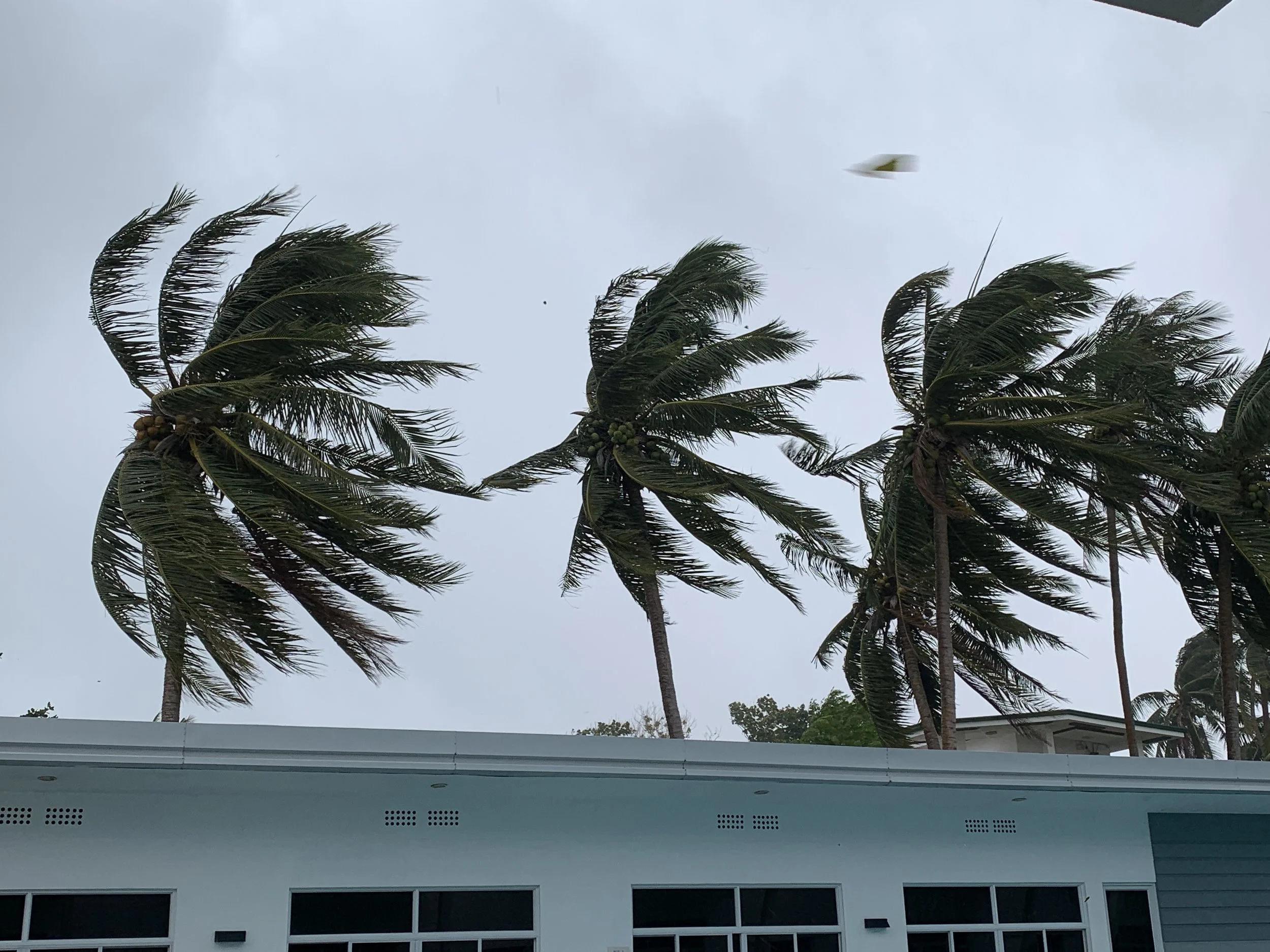
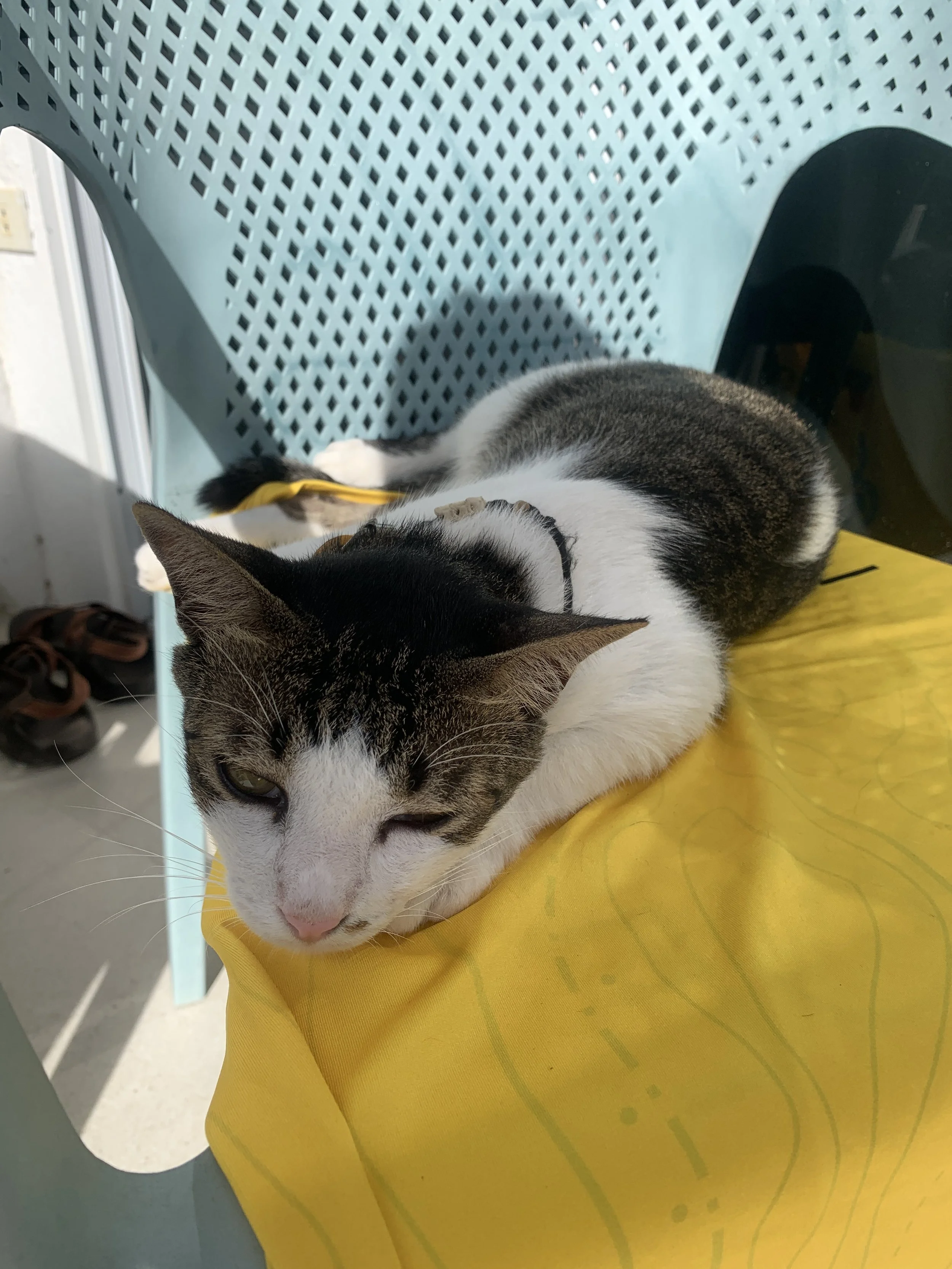
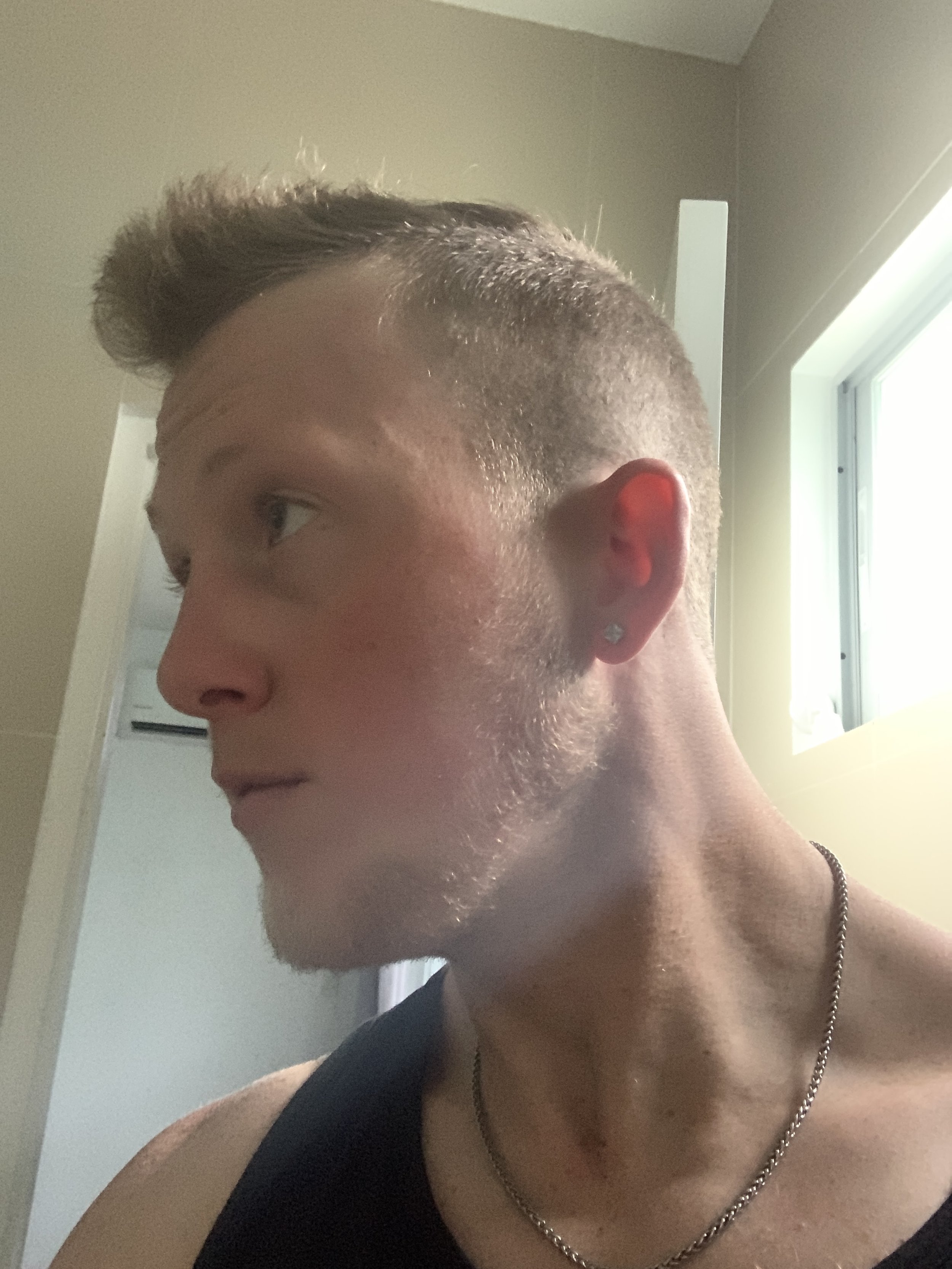
We’ve watched crazy tropical storms, chilled with the local cats, and I got a faux-hawk of sorts for $2. To keep sinuses clear and heart rates low, we’ve limited alcohol and prioritized sleep. Like 9-10 hours a night of sleep. No wonder they call this paradise.
Additionally we are very sunburnt, bug bitten, and have several jelly fish stings. One in a spot I don’t care to mention or describe. Needless to say we are thriving and feel incredible.
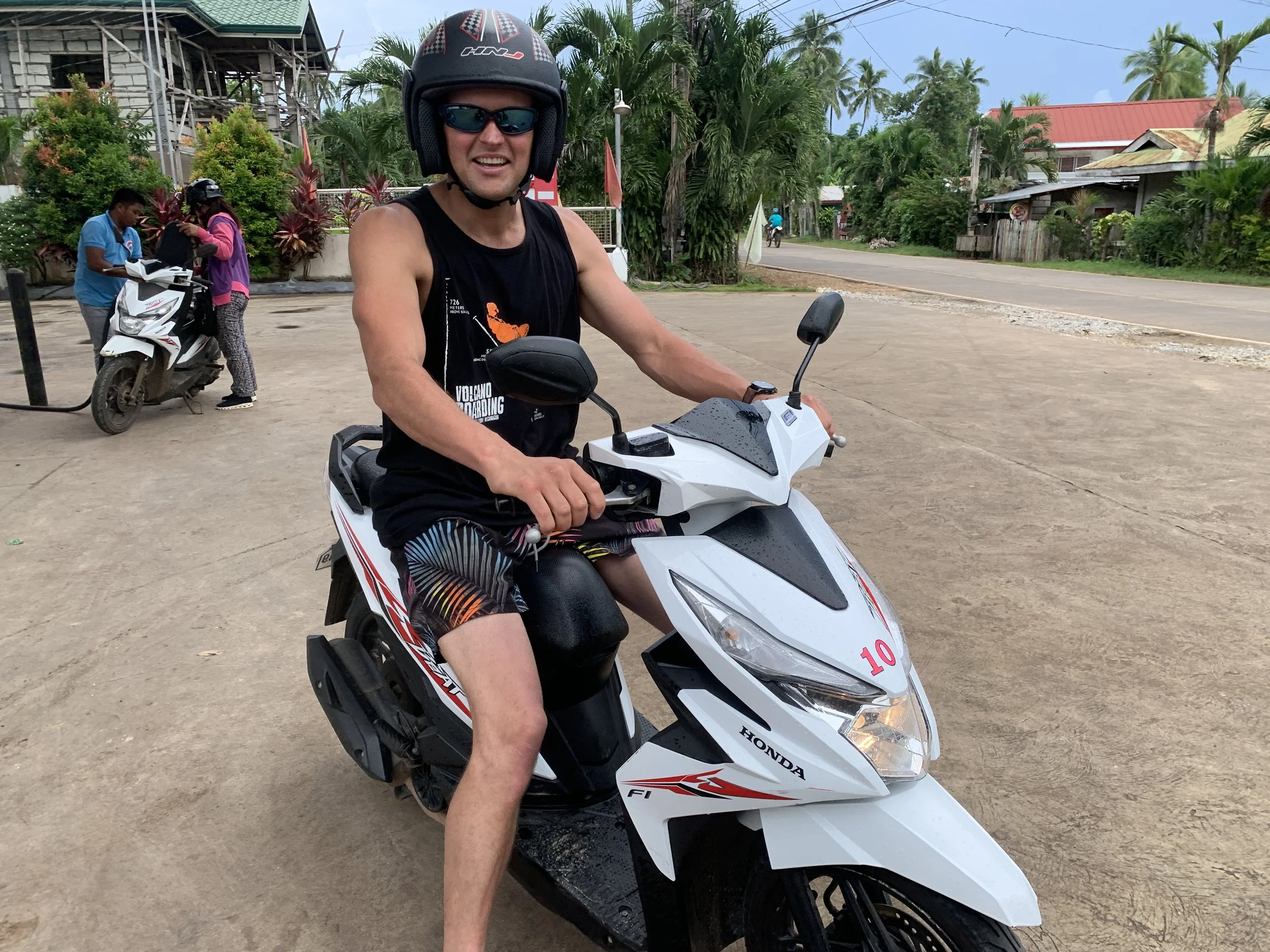
The first week was interesting. We haven’t actually started formal freedive training yet. There was an international competition at our dive center and our instructor competed. Which was perfect. We were able to get settled, learn the area, rent our motorbikes, and become “locals”. We watched the competition each morning and followed it up with fun dives on local reefs. It allowed me to focus on my own training and dive back into the sport before the work begins. To my surprise, I already feel close to the ability I left off with last time.
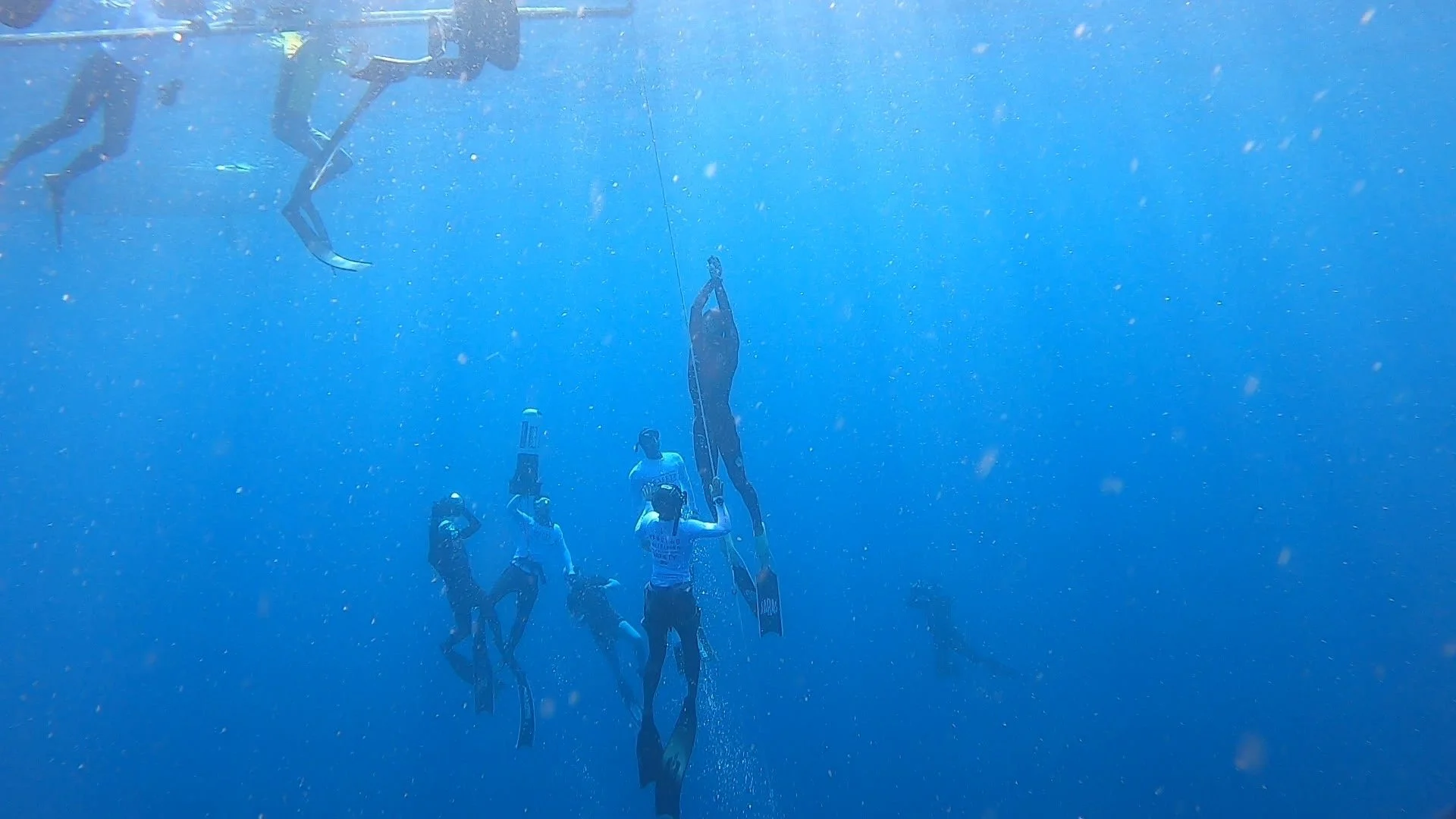
Competition Shot - others underwater with the diver are photographers and safety-divers (Tanner’s photo)
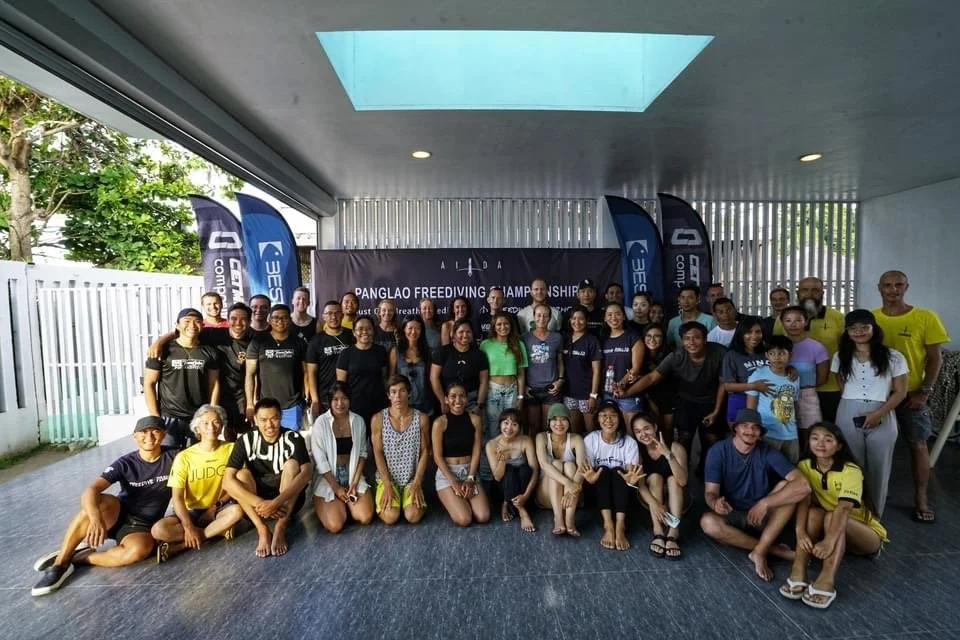
Speaking of the competition, it was wild. We watched multiple divers break national and continental records. The most insane was Kurt Chambers from Hawaii with a 109m (358ft) constant weight dive with a mono-fin. Our instructor Guy crushed it on free-immersion dives to 60+ meters.
And then one diver blacked out at 10 meters on his way up from a 70m+ attempt. Due to partial pressure O2 changes during lung contraction and expansion under pressure, blackout is most common in the top 10 meters. Hence the term “shallow-water blackout”.
The safety divers worked quickly and got him onto the boat where he finally came-to. Then off to the hospital for chest X-rays. A heady reminder of what pushing limits can entail. But also a confirmation that safety protocols work.
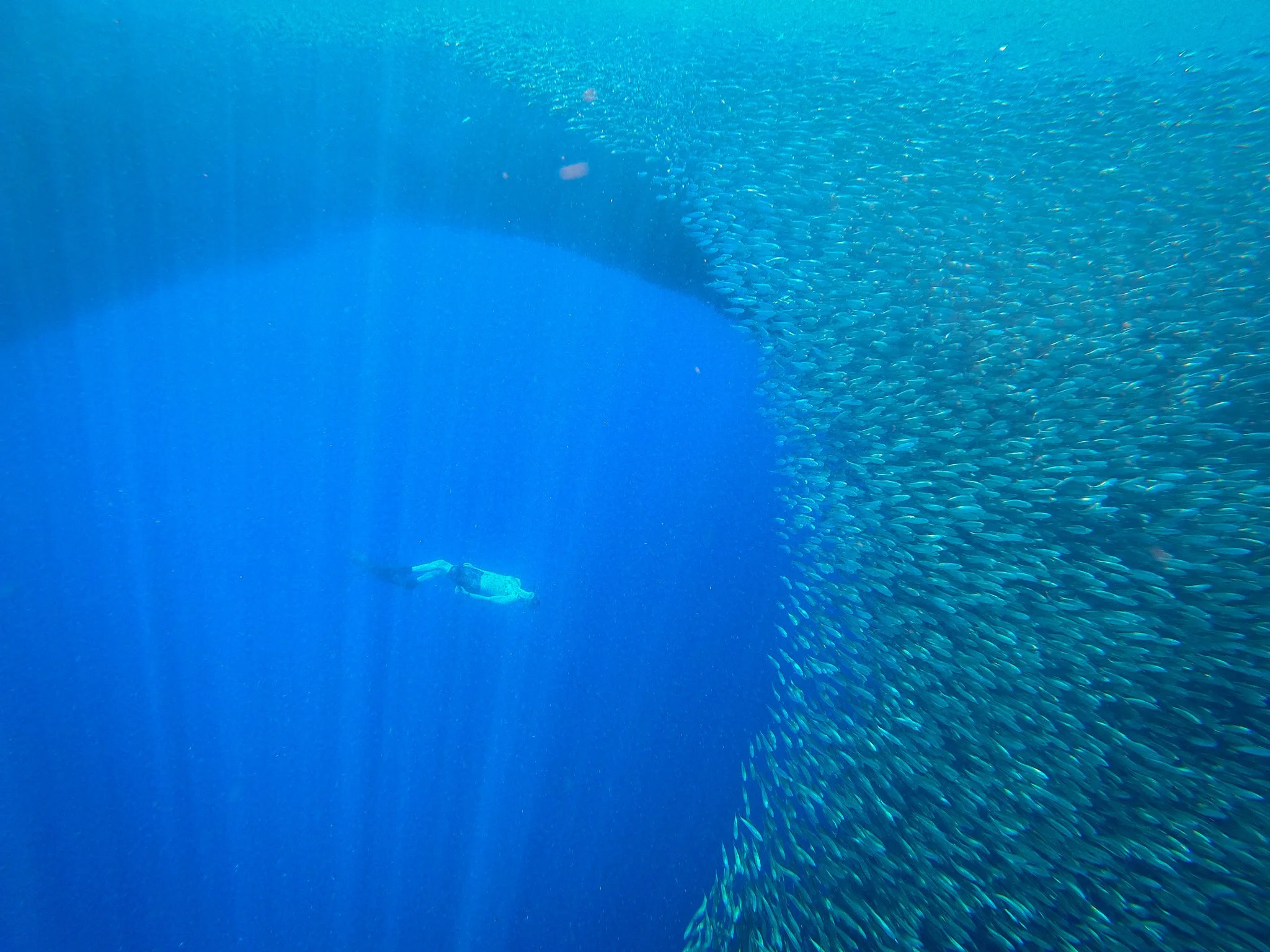
Tanner and I had a lot of time to fun-dive reefs and practice apnea on our own. Our island is a freediving Mecca because five minutes off shore the reef drops to 200 meters. It’s a beautiful wall of coral that lets you practice deep dives or stay shallow and look for critters. Throughout the week we saw clown-fish, schools of sardines, barracudas, moray eels, and turtles.
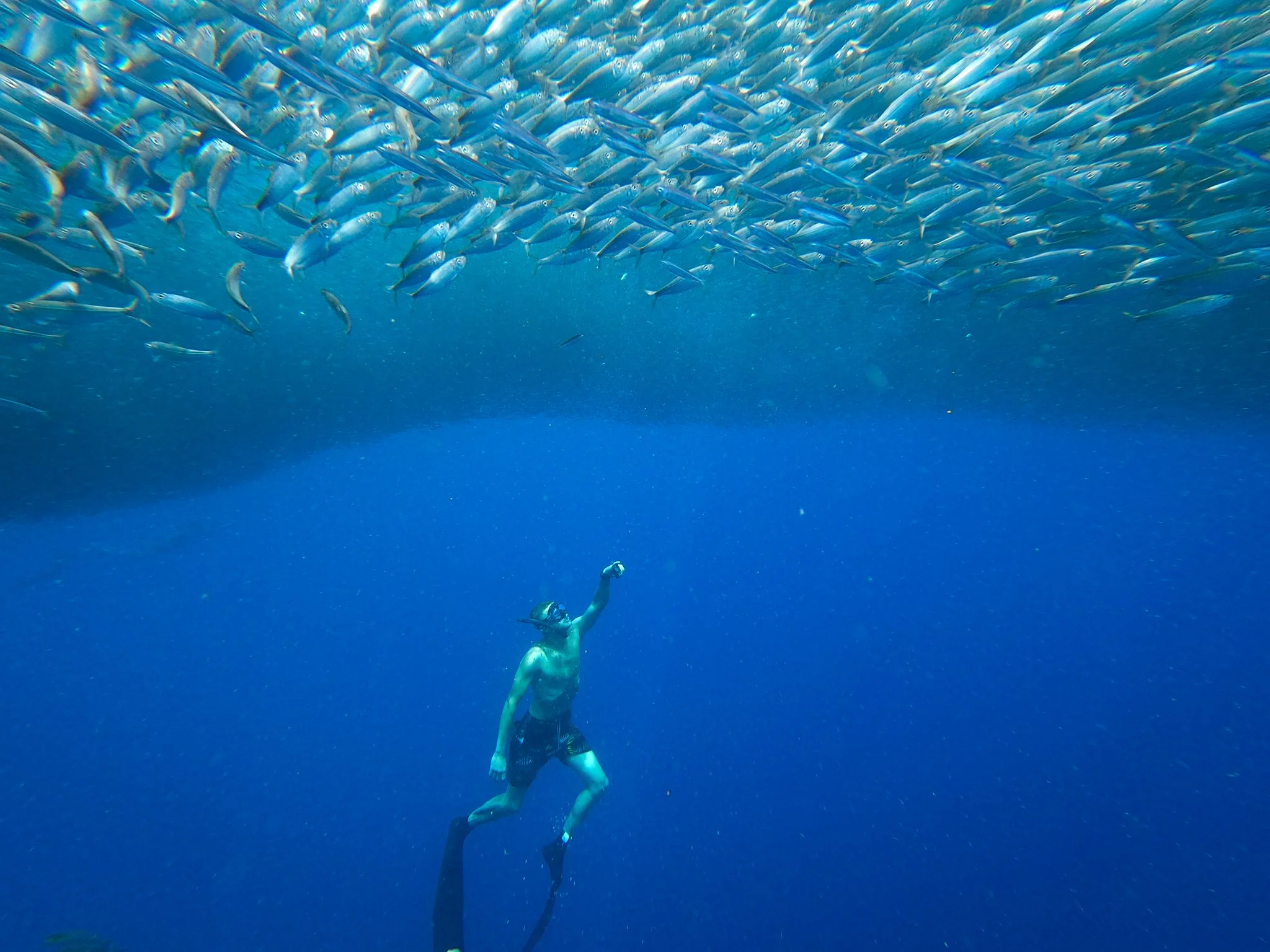
The highlights came on June 24th. That morning during the competition I practiced several 20m hangs. So fun to swim down 66 feet and stall. Your body bobs around at the cadence of the current. Meanwhile jelly-fish and random flashy orb things float past you in this giant sea of blue. Hangs are fun because they offer time to soak in this foreign location. 20m is perfect because deeper than 30m it’s basically pitch black.
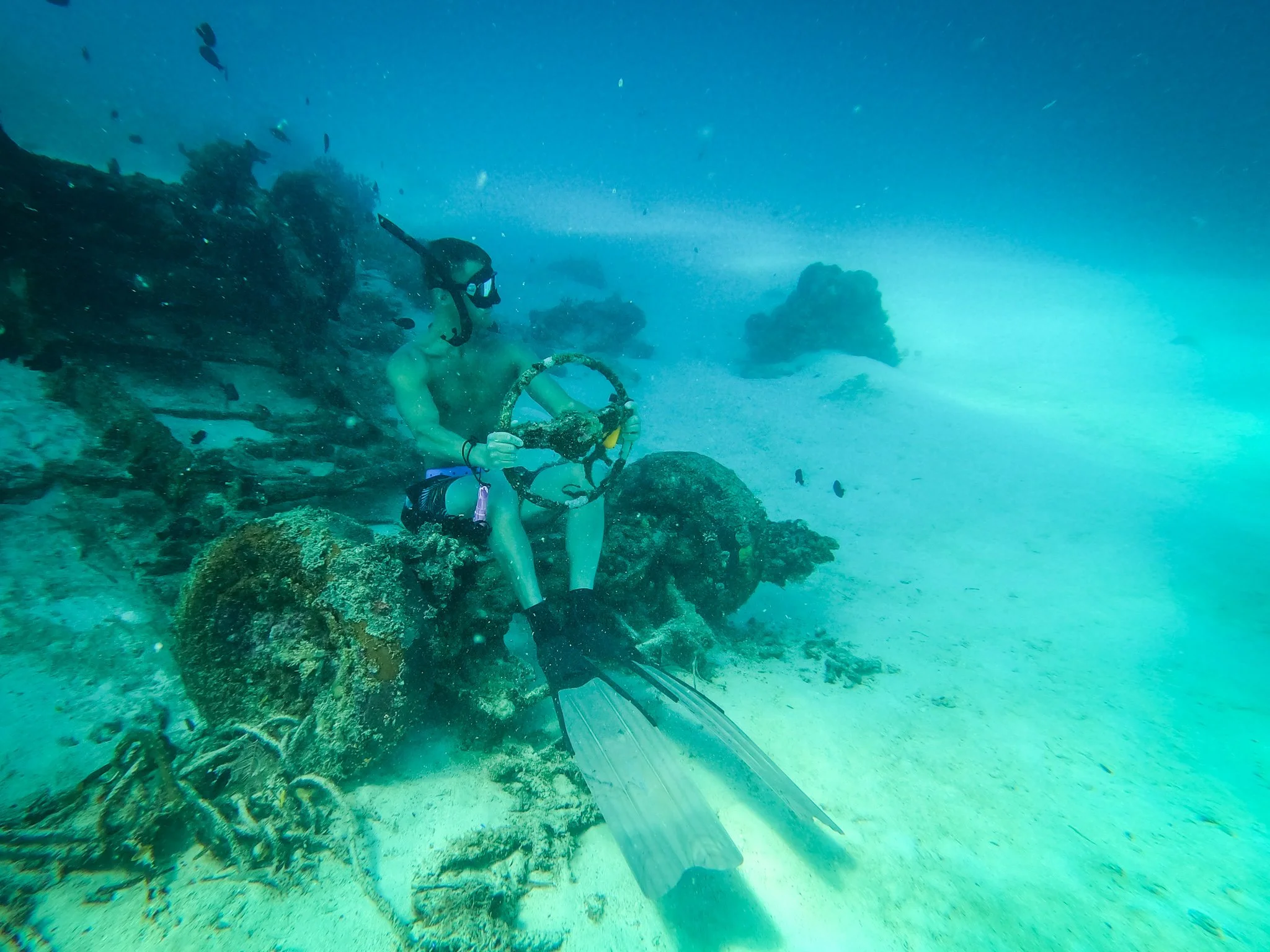
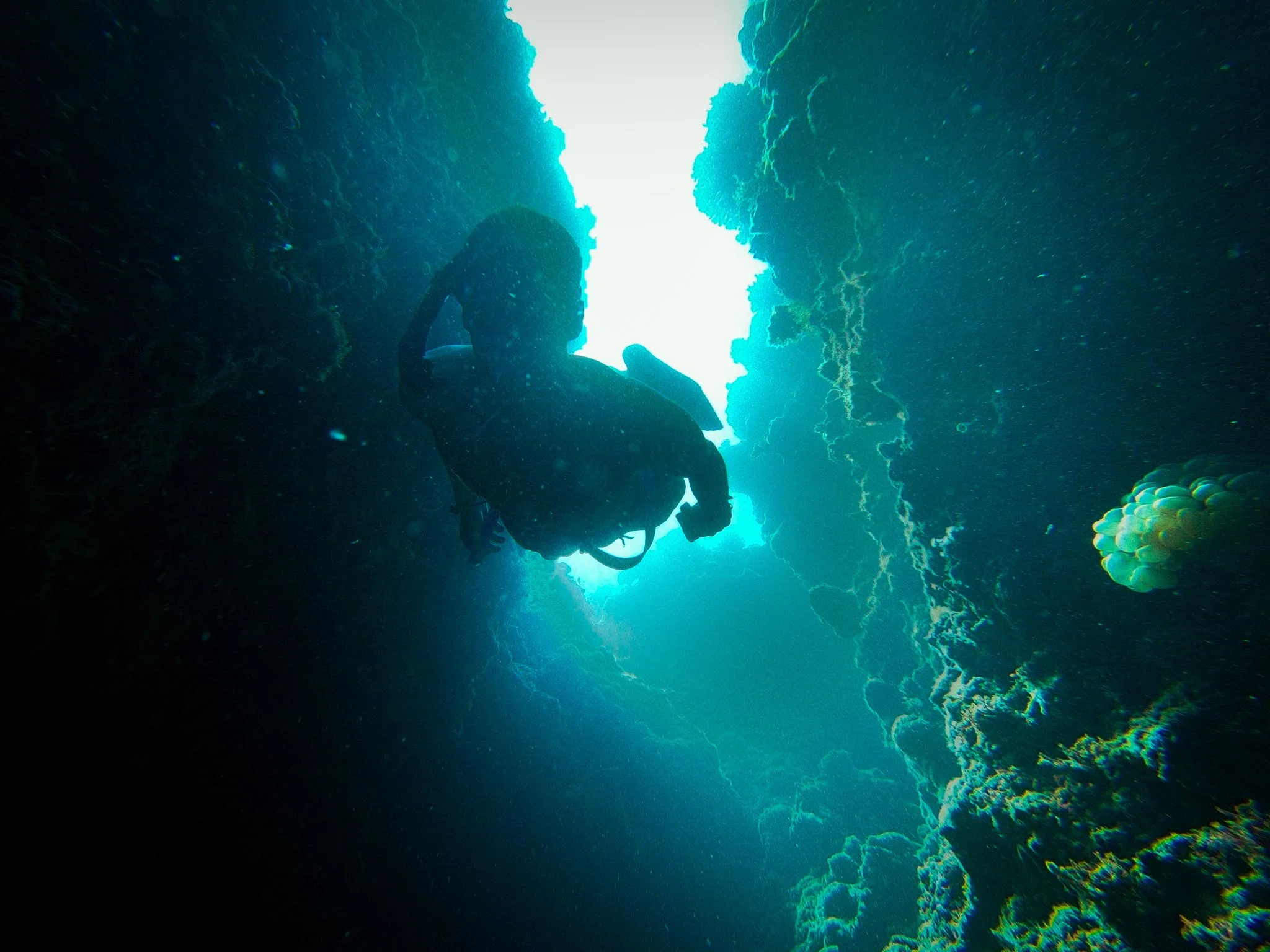
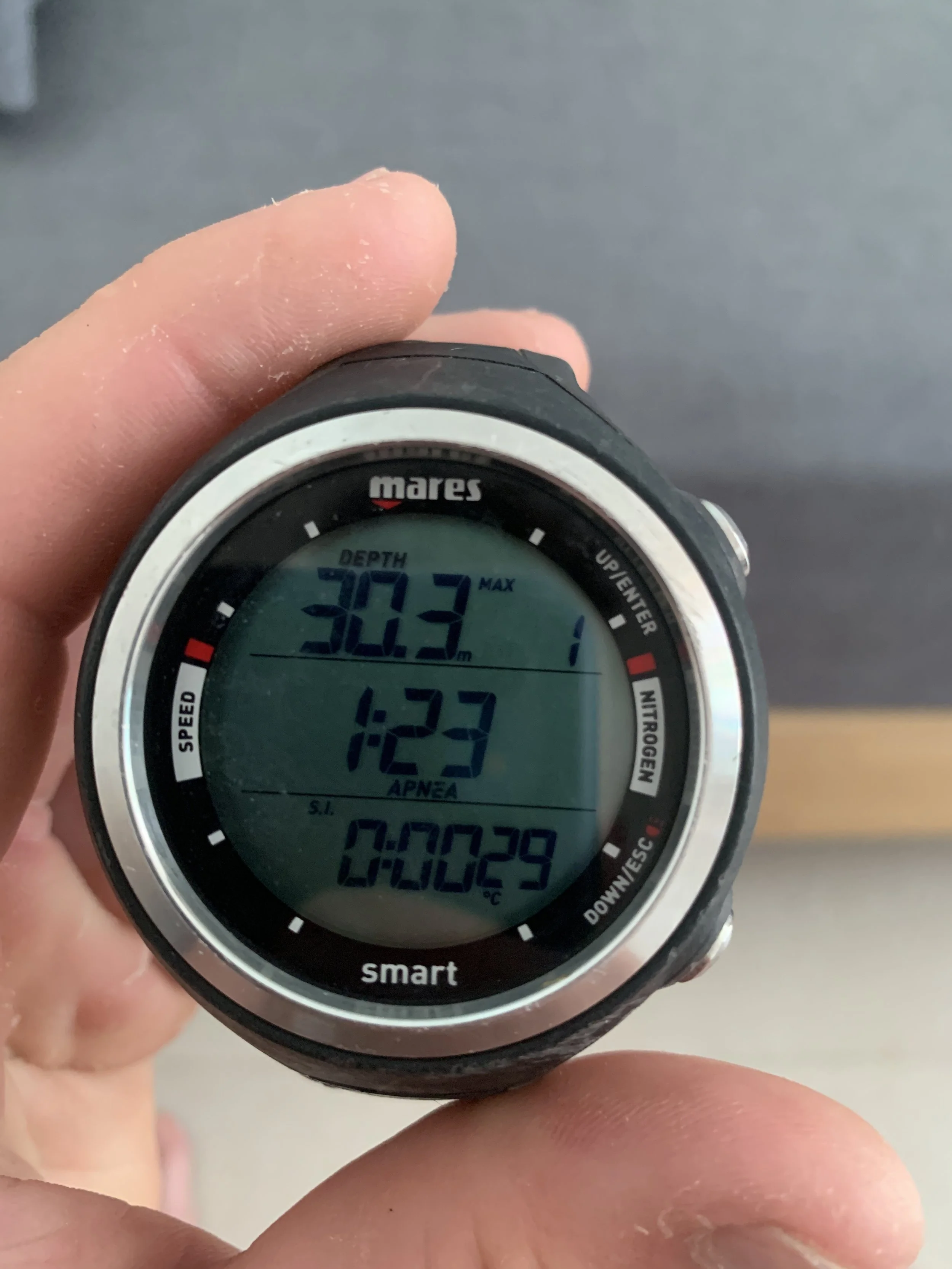
In the afternoon we dove our local reef. My first highlight came when I hit a 30.3 meter dive. When diving next to a rope it’s easy to descend straight down. Without a rope and on a reef, I naturally descend at an angle. This “hypotenuse” descent is longer and thus makes me even more proud of the 30.3m. Bodes very well for my #Roadto40m!
Tanner’s highlight came in the form of turtles. I kept losing him as he veered this way and that, kicking violently to keep up with these fast marine reptiles. When I’d finally find him, he’d pop out his snorkel and look at me with a smile that perfectly said “I like turtles”. And yes, in my head with the exact voice of that kid from YouTube.
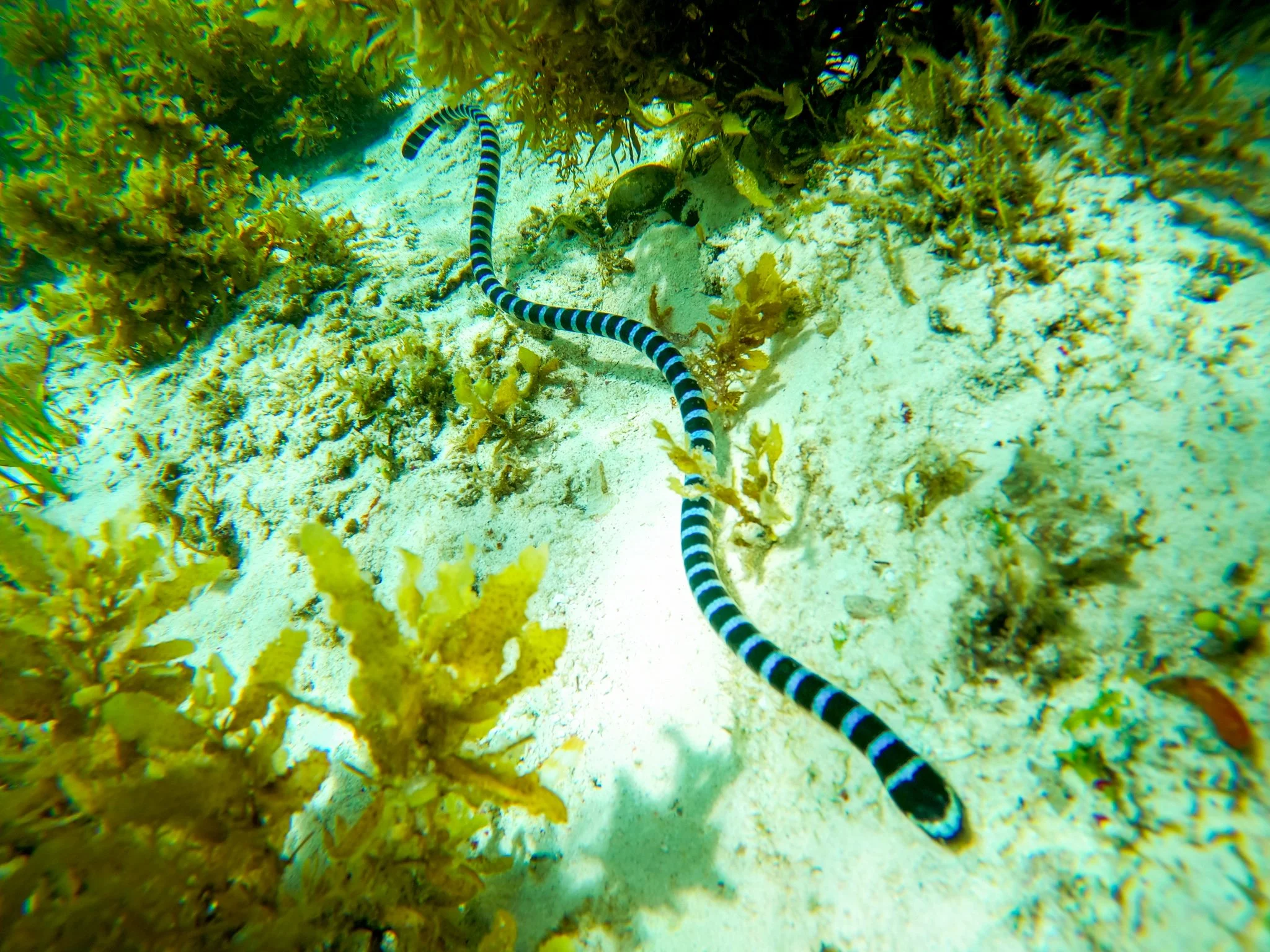
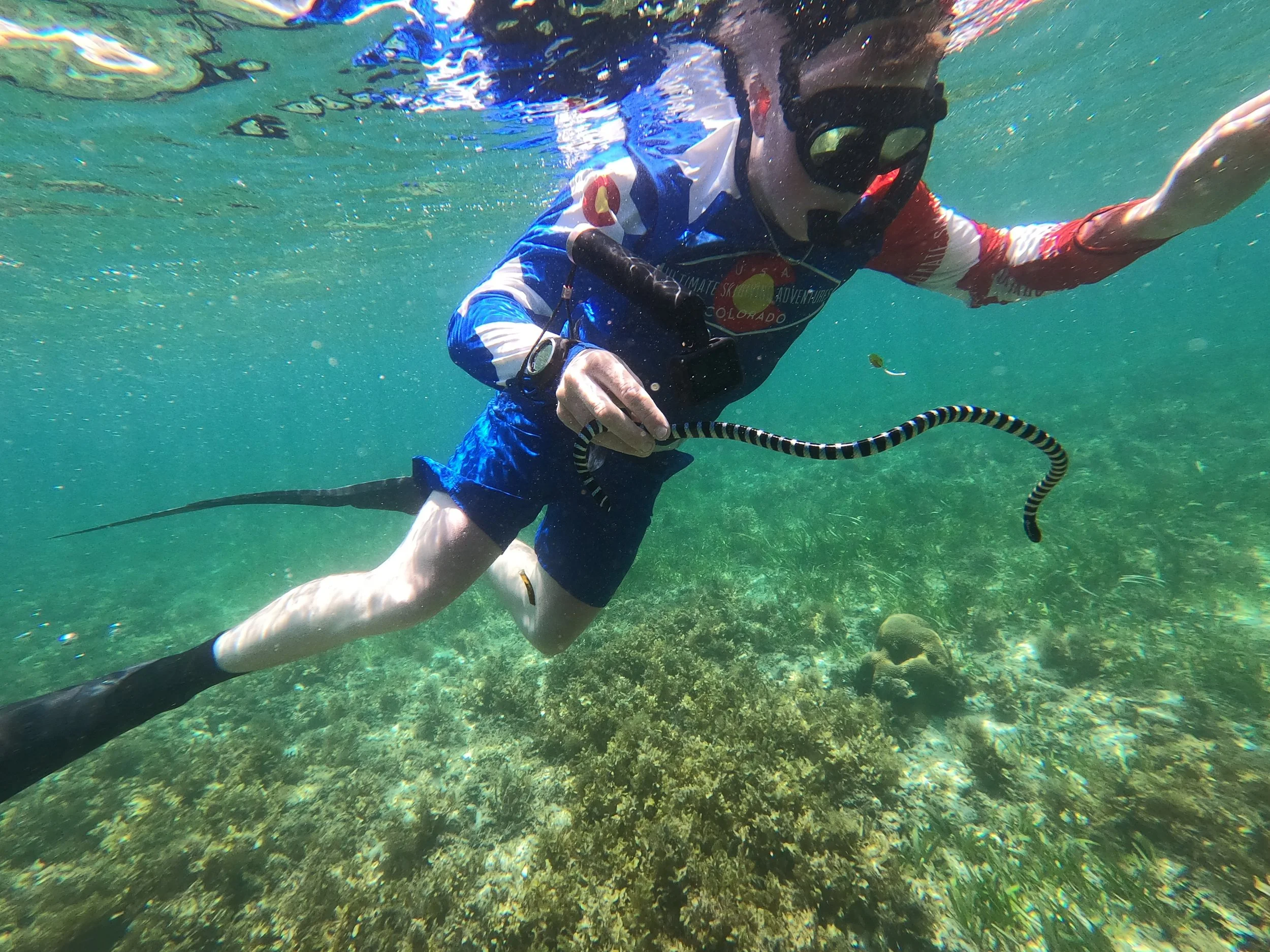
Pumped on dives and critters, we started swimming back home. Nature had one more surprise for us. I jokingly yelled to Tanner “I’ll buy you the biggest dinner if you find me a sea krait”. Literally not 5 seconds later I threw my mask on, looked down, and at my feet was a massive female banded sea krait.
Coincidence, fate, or dump luck I don’t care. The banded sea krait is a beautiful and highly venomous sea snake. 10x stronger venom than a rattlesnake! If you know me you know I love snakes. We swam side by side with this guy for awhile. Of course I wrapped my hand around him too. We found a big goal of mine in just the first week.
The day was so rockstar we had to celebrate. So we balled out on a huge Thai dinner for $25-$30 US whereas most dinners have been $5. Worth it.
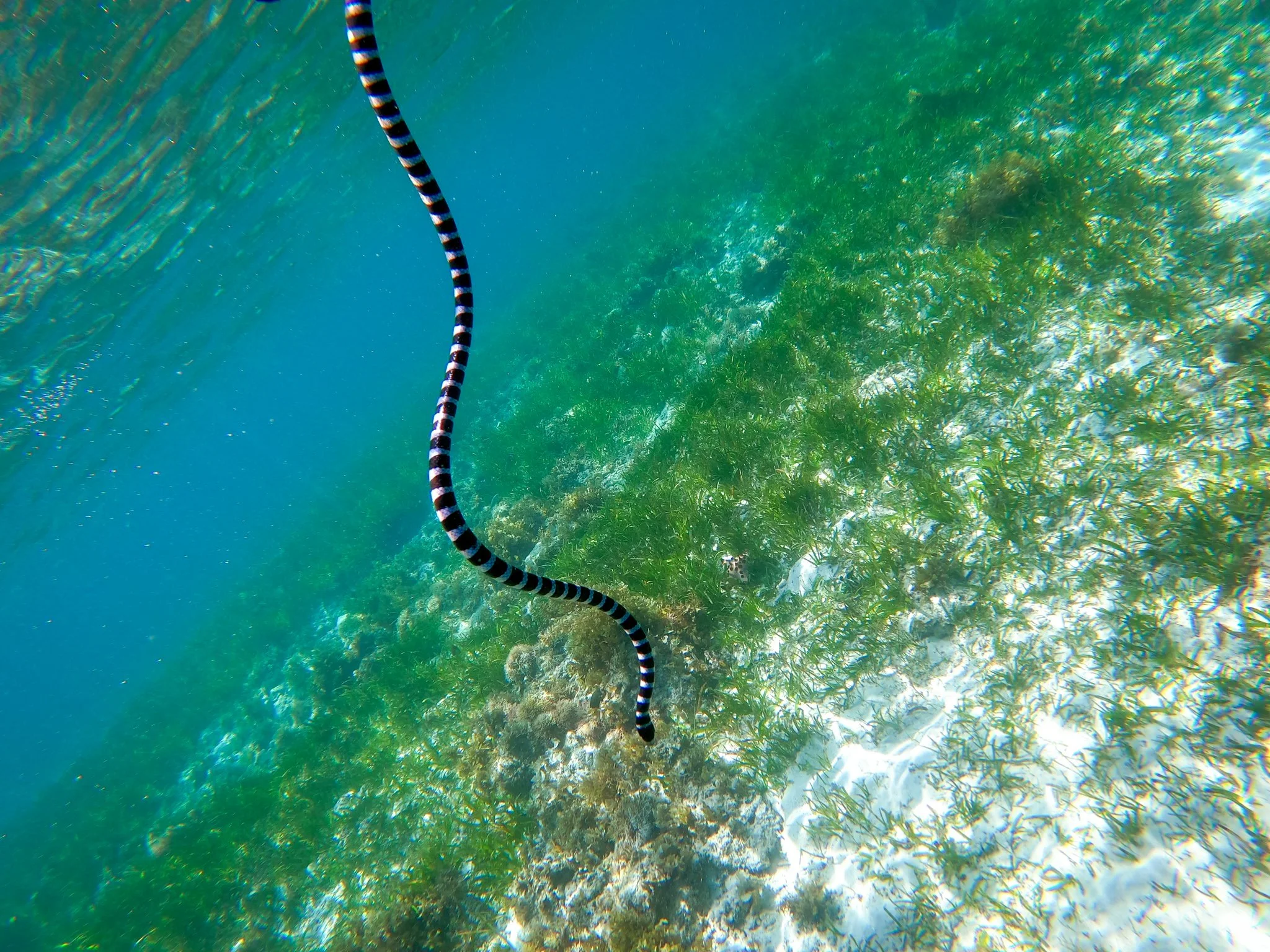
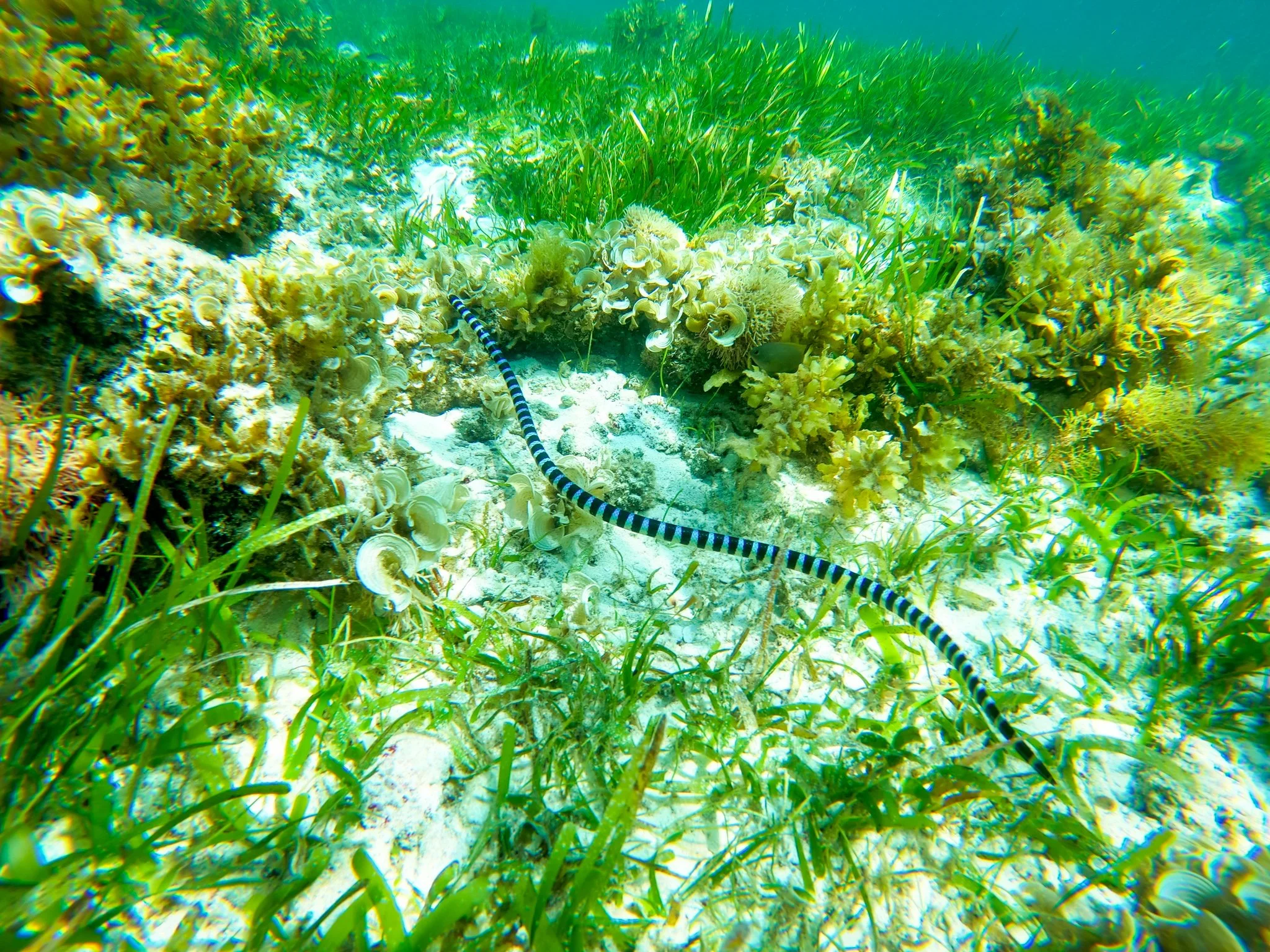
Speaking of sea snakes we found 2 more later that week. Both smaller than the first - probably males. All those pictured here are the small ones. The big female we only have video of but she was easily 4-5x larger. The final snake was at night while spearfishing with some locals.
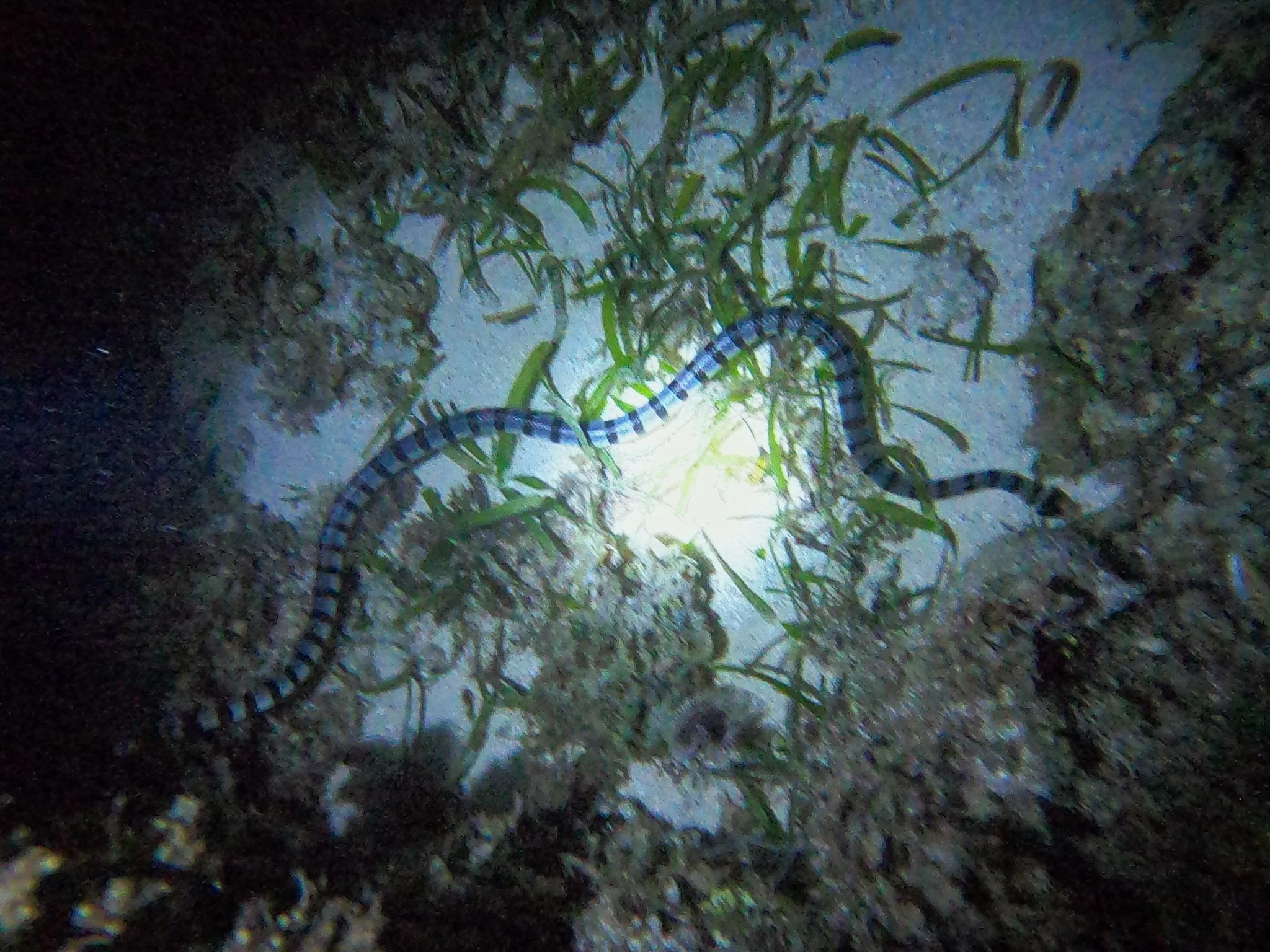
In broken English and sign language, they agreed to lend us some guns and take us out. Super fun night with obviously a fresh meal after.
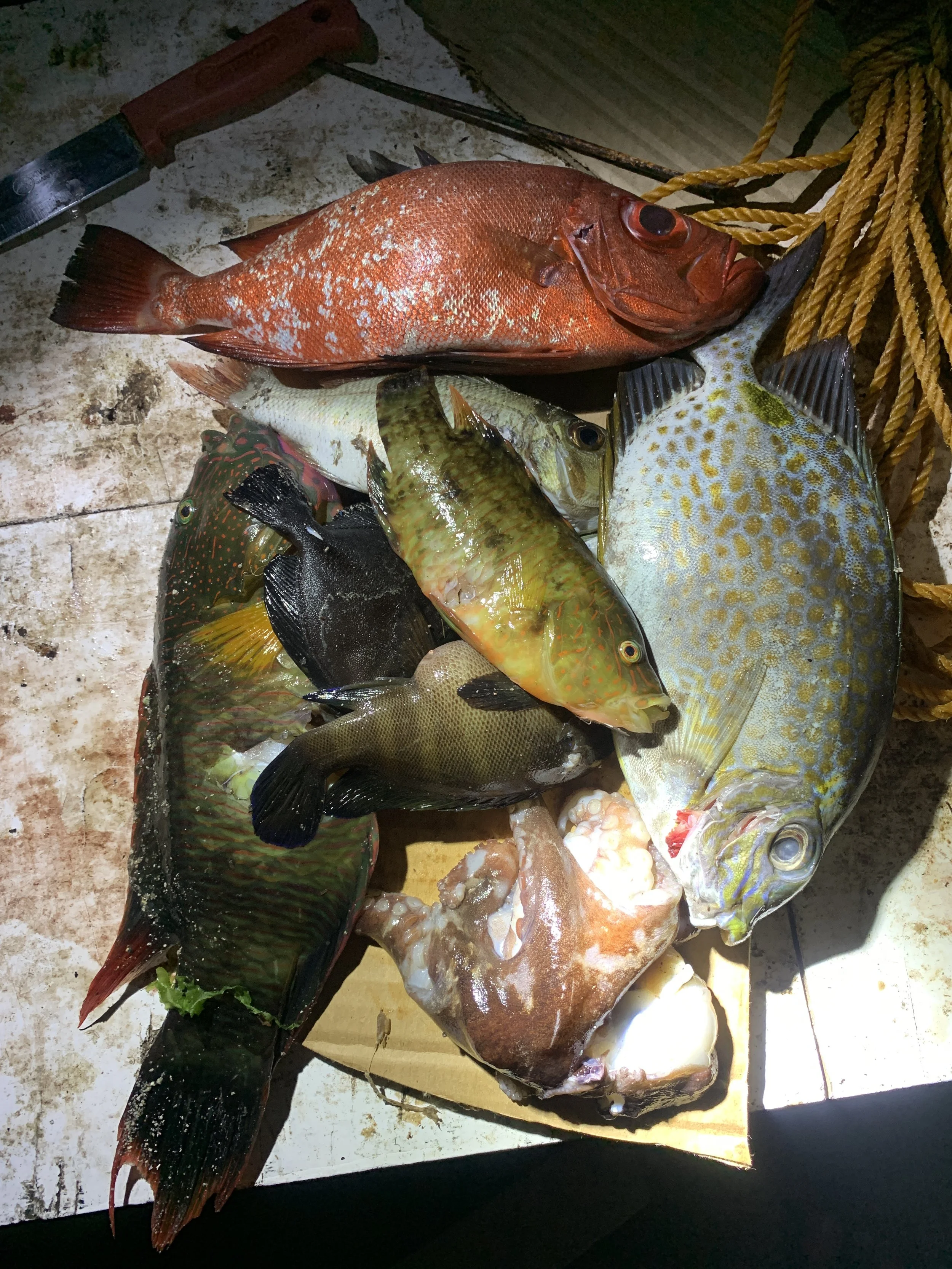
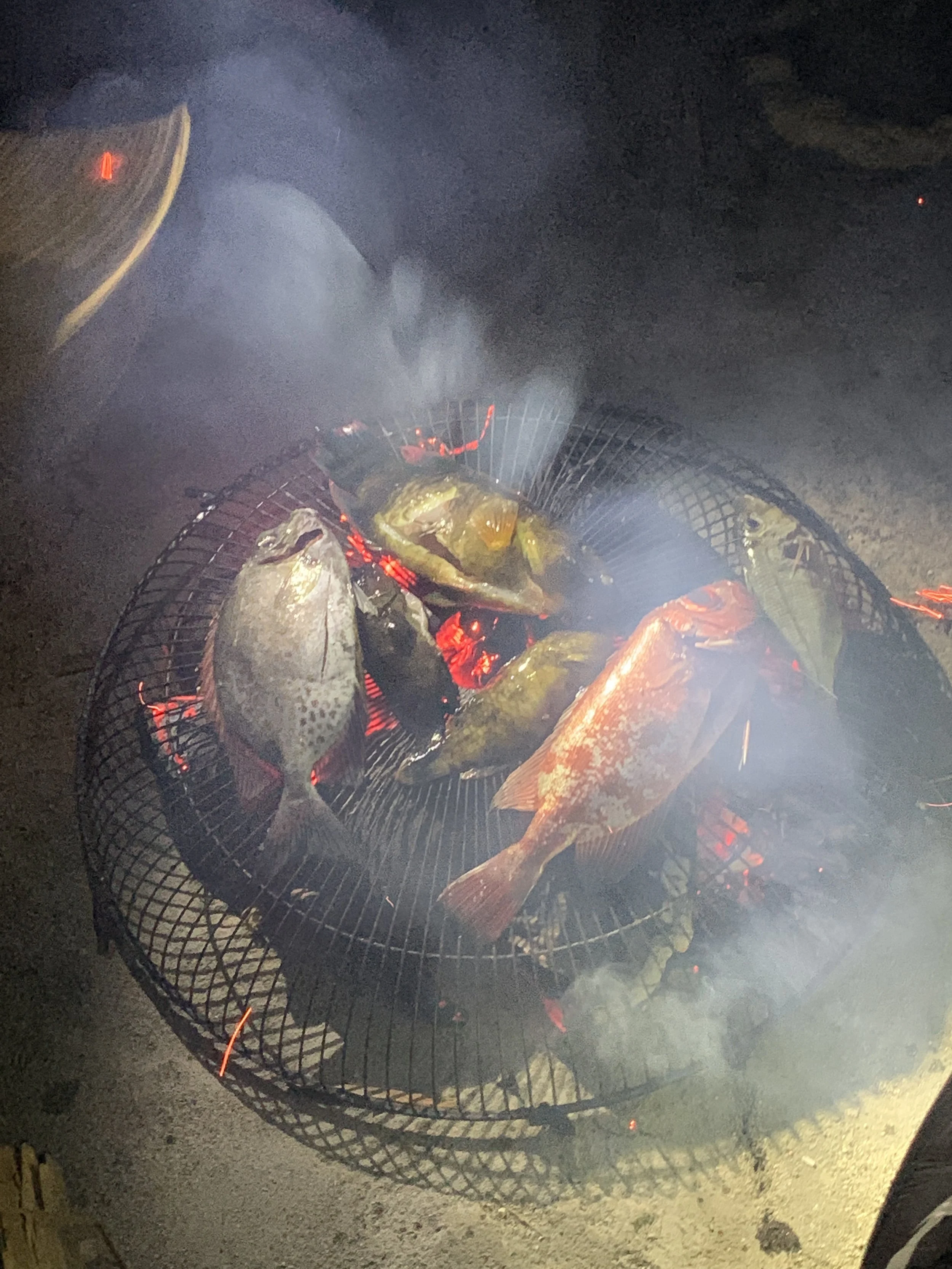
Coolest part of the night, however, wasn’t the snake or spearing. It was the bioluminescence. If you don’t know what I’m talking about, stop reading and google it. It was the top 3 strongest bioluminescence I’ve experienced.
Picture green and blue flashing jewels raining off you by the thousands whenever you stroke the water. Now picture ascending from 50ft deep with your flashlight off. You become a glowing mermaid with millions of shooting stars trailing around you and in your wake.
If you’re a Jackson local, picture “glit gang” x1000 all over your body (@glit.gang)
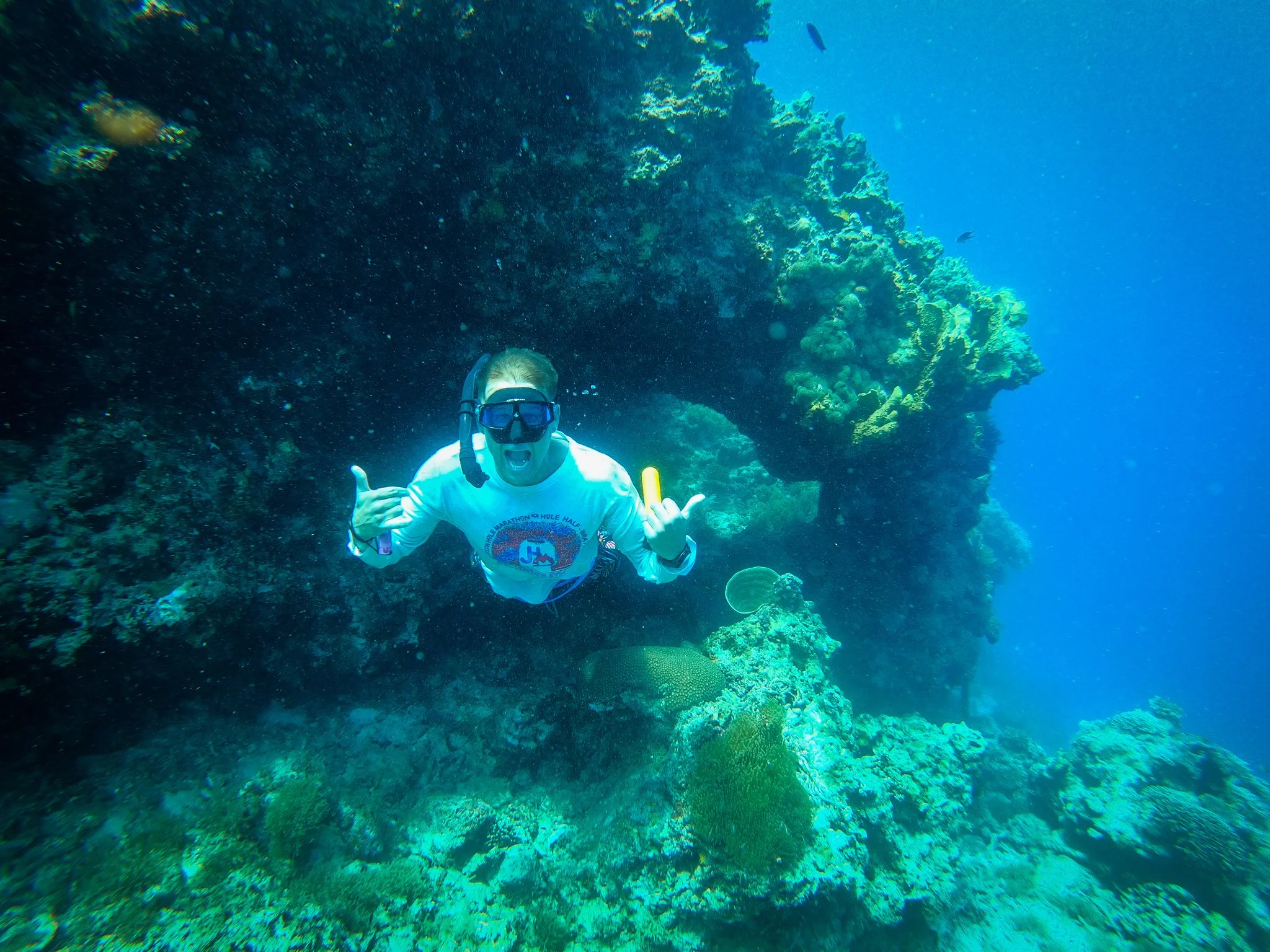
Ok fun aside, it’s time for school. Luckily our school is hella fun. Formal training started today. Reef dives are traded for buoy dives into the blue abyss - my favorite.
We train, study, and focus. People think Tanner and I just goof and play. Ya I guess that’s true but check it - we have legit course materials and exams! Knowledge is the key to good training and proper training is the key to getting deeper.
Learning is so addicting. In fact, since college graduation I’ve made it a point to test myself, learn something new, and go back to “school” each year. Only I don’t see graduate school in my future.
Since graduation I’ve taken two freediving courses, a month-long horse-packing course, and got certified to skydive. I prioritize money each year into my “schooling” so I am constantly challenged. Only my “classrooms” look a bit different. I recommend you do the same and never stop learning.
Ok off to class. I’ll update again in a week or so to track our progression. Freediving has many disciplines, most notably Free Immersion (FIM), Constant Weight (CW), and Constant Weight No-Fins (CNF). We’ll track progression in those as well as static breath holds for time (STA) and dynamic breath holds for distance (DYN) in the pool. I’ll explain all of this in detail in the next post.
———————————————————————————————————————————————--
Feel free to stop reading. That’s the end of the update. For those not tired of me yet - here’s some useless rambling. Kind of letting this blog be a word vomit of my ideas lately.
I would argue I’m ADHD when it comes to outdoor sports. Each fuels a fire under me in a different way. I can’t stick with just one. I find stoke and fear and excitement and butt-pucker in them all. But in unique ways that no one sport can accomplish.
That leaves me no choice but to seasonal bounce between all of them - an outdoor generalist you’d say. This allows for an interesting perspective and comparison between sports - something a specialist may not get.
Recently I’ve compared mountaineering and freediving for no real reason.
In the mountains we chase a particular spot or height that’s relatively arbitrary yet still is a unique point on earth. Freediving we similarly climb and push ourselves to a spot, only not a height but a depth. Depth is even more arbitrary because 40 meters is 40 meters all around the ocean. It’s not even a specific spot in the ocean. It’s fascinating how relatively pointless that number is yet depth goals can consume us.
How cool is that, however, that 40m is 40m anywhere in the ocean? The pressure and constraints on your body will be equal whether seeking 40m in the Philippines, Mexico, Egypt, etc. There’s only one Everest, one Denali, one El Cap. Sure you can stand at 20,310 feet on your way up Everest, but it’s not the same experience as 20,310 feet at the top of Denali. In freediving it is.
One more comparison. The saying goes in mountaineering - “going up is optional, coming down is mandatory”. One could argue similarly for freediving - “going down is optional, coming up is mandatory”.
But that analogy isn’t so simple. In the mountains the way down is generally known, scoped out, or oftentimes you’ll reverse the same route you went up. Weather can change, panic or fatigue can set in, but at least you know the mandatory “down” part and what it likely entails. Oftentimes a huge slog that will be type 2 fun and steal more of your sleep and calories than you wished.
Freediving’s mandatory section is scarier. Maybe not to a master but to a recreational diver like myself. Sure I know what it looks like - just swim upwards. A couple things. First, ascent is harder than descent. The human body is negatively buoyant beyond depths around 10-20 meters. So down you can free-fall, up you have to kick against the ocean’s weight. It can be tough to decide how much energy to conserve for it.
Next, the deeper you go, the longer the mandatory “up” becomes. And going deeper can feel deceptively easy. Partial pressure of O2 in your shrunk lungs is high. You likely still have half your breath left or more. But with each meter more, you raise the difficulty of surfacing.
If a descent on a mountain goes bad, you lose more sleep, feel more sore and broken, and maybe decrease the chance you’ll try again. If an ascent on a freedive goes bad, you blackout. There’s no do-overs or turn arounds for realizing you pushed too deep. The surface is the surface and you have to get there. Keep kicking, stay calm, conserve O2, and hope you have enough to reach it.
The mandatory section of diving seems to hold more unknowns than the mountains. But I’m sure a seasoned freediver new to the mountains would say the exact opposite. Touche.